Interview
Jung Ki Min
1 Congratulations on winning the French Design Awards! Can you introduce yourself and share about what inspired you to pursue design as a career?
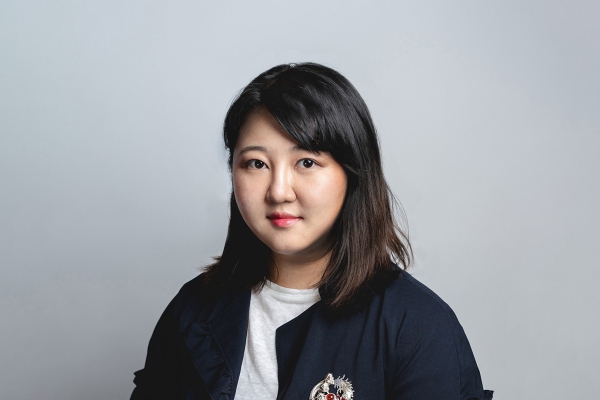
I am a jewellery artist based in New York. My practice focuses on creating wearable objects that function as psychological portals. I draw inspiration from distant real locations or imagined environments, aiming to evoke a sense of longing for places one has never visited, while offering moments of emotional release within everyday life. Through my work, I explore the idea of mental transportation to other places, constructing dreamlike and immersive forms by layering and combining diverse materials.
2 What does being recognised in the French Design Awards mean to you?
My jewellery often sits between art, design, and conceptual exploration, so having it acknowledged in an international design context is especially meaningful. It encourages me to continue developing my practice while staying clearer and more confident. It also connects my work to a broader global audience, which is incredibly valuable as I continue to grow as an artist.
3 How has this achievement impacted your career, team, or agency, and what opportunities has it brought so far?
While the full impact continues to unfold, this recognition has already given me greater confidence in presenting my work in design-focused platforms and engaging with a wider professional audience. More importantly, it motivates me to continue pushing my work further, both technically and conceptually.
4 What role does experimentation play in your creative process? Can you share an example?
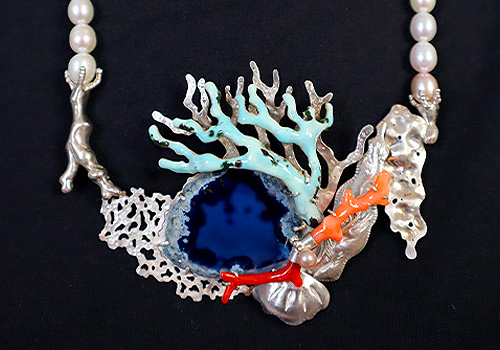
Experimentation plays a central role in my creative process. Rather than starting with a fixed idea, I often allow the process itself to guide the direction of the work. Sometimes I begin with a specific design and then explore materials that best support it, while other times the process starts with collecting and experimenting with materials, which then leads to the development of a design. In this way, material and design influence each other, continuously shaping throughout the process. For example, in this piece, I created a series of test samples to explore how different colours and textures could be arranged. Through this process of experimentation and comparison, the final composition emerged as a careful selection of the best combinations.
5 What's the most unusual source of inspiration you've ever drawn from for a project?
One of the more unusual sources of inspiration in my work comes from places I have never physically visited, but have only experienced through images, maps, or imagination. I am interested in how a sense of place can be constructed without direct experience, and how longing for distant or unknown environments can shape emotional perception. I often gather fragments of these imagined or mediated landscapes and reinterpret them through material exploration. This process allows me to create work that feels both familiar and unfamiliar at the same time, as if the wearer is accessing a place that exists somewhere between memory and imagination.
6 What’s one thing you wish more people understood about the design process?
I wish more people understood that the design process is rarely immediate. It is often slow, iterative, and involves a lot of trial and error. A finished piece is usually the result of numerous adjustments, failed attempts, and unexpected discoveries along the way. I hope this allows people to develop a deeper appreciation of the work by understanding the process.
7 How do you navigate the balance between meeting client expectations and staying true to your ideas?
Understanding a client’s expectations is an important starting point, but I approach it as a process of interpreting and translating their needs through my own perspective. Rather than simply adjusting my work to fit a request, I try to find a shared direction where both the client’s intentions and my ideas can coexist. This often leads to outcomes that feel more meaningful and considered. I aim to maintain the core concept while allowing it to evolve through collaboration.
8 What were the challenges you faced while working on your award-winning design, and how did you overcome them?
One of the main challenges was finding a balance between different materials, textures, and visual elements, while also creating a sense of depth within a relatively small scale. The work involves multiple textures, and even small adjustments could significantly change the overall perception. To resolve this, I developed a series of test pieces, experimenting with placement, spacing, and layering. Through this iterative process, I was able to refine the composition and achieve a balance where the elements feel cohesive while still maintaining a sense of depth and complexity.
9 How do you recharge your creativity when you hit a creative block?
When I encounter a creative block, I try to expose myself to different kinds of creative work. Rather than limiting myself to jewellery, I spend time exploring various art forms at museums and exhibitions. Experiencing different forms of art and thinking often helps me shift my perspective and find new directions. I also revisit my previous sketches and ideas, which sometimes reveal possibilities that I had not fully explored before. These moments of looking outward and backwards allow me to reconnect with my work in a more open and refreshed way.
10 What personal values or experiences do you infuse into your designs?
My work is deeply informed by personal experiences of frequently moving between different places, which have deepened my sense of longing for a space where I can feel grounded and at ease. Through my work, I aim to offer moments of pause and emotional resonance, where the wearer can momentarily inhabit a space that feels both personal and open to interpretation.
11 What is an advice that you would you give to aspiring designers aiming for success?
I still consider myself to be in a continuous process of learning, so I don’t feel in a position to give advice. However, I believe that one of the most important things is to stay consistent in your practice while listening closely to your inner voice.
12 If you could collaborate with any designer, past or present, who would it be and why?
Rather than a specific designer, I’m more interested in collaborating across disciplines, particularly with artists working in spatial installation, material research, or image-based practices. I find that conversations across different fields often open new ways of thinking, which I value deeply in my work.
13 What's one question you wish people would ask you about your work, and what's your answer?
“What do you hope people feel when they wear your work?” I hope the work creates a moment of pause, an opportunity to step away from the immediacy of everyday life. I aim to create an open space where each person can project their own thoughts, memories, or imagined places.