2026 | Professional

Signage System Design for the China Great Wall Museum
Entrant
Beijing Jingsheng International Cultural Development Co., Ltd.
Category
User Experience (UX) Design - New Category: Signage
Client's Name
Country / Region
China
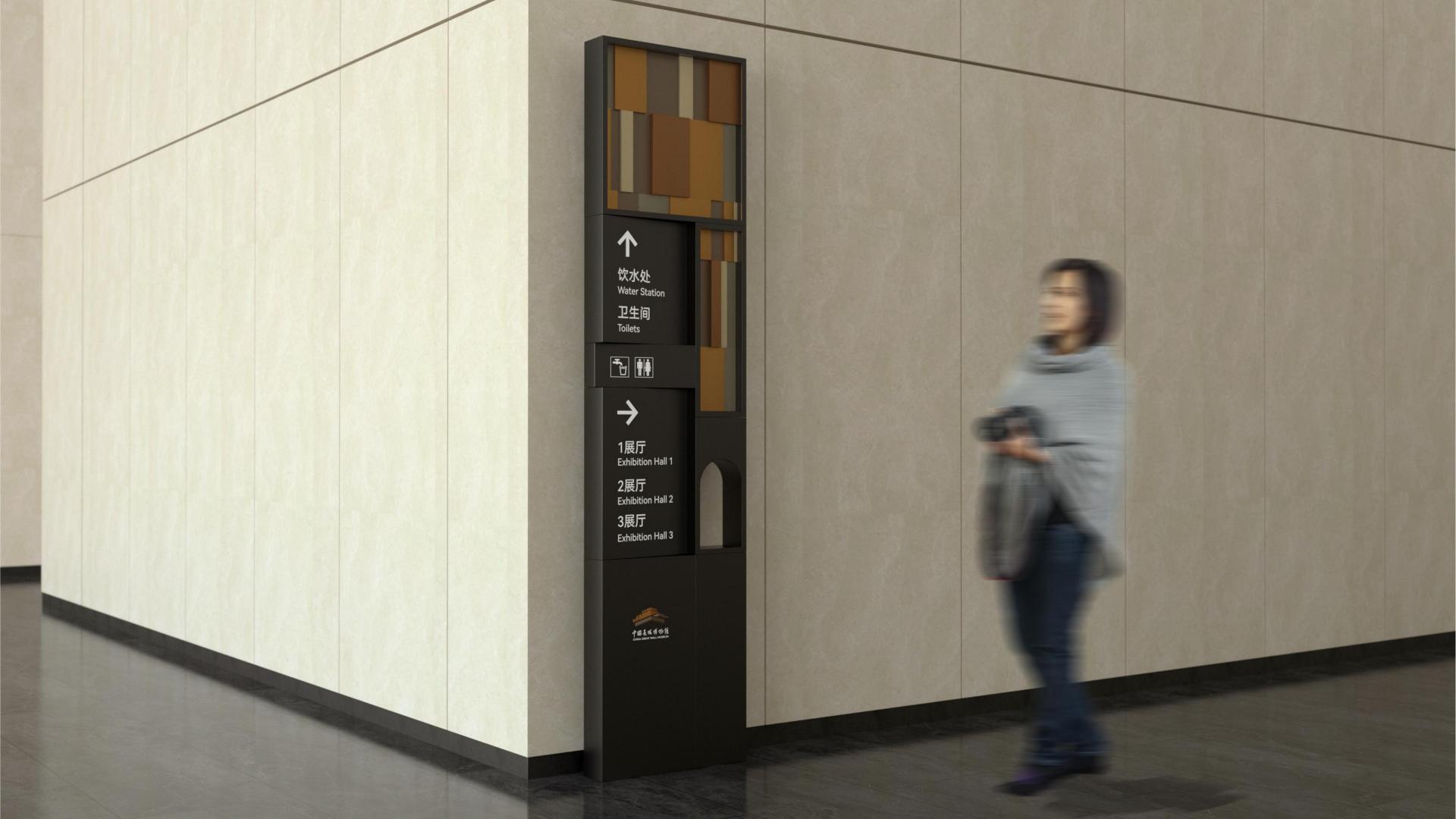
Drawing from the tectonic logic of the Great Wall's masonry, this wayfinding system is conceived as a three-dimensional architectural interface, signage no longer simply affixed to space, but integral to its order.
The use of geometric color blocks is the system's most distinctive visual signature. Masonry logic is abstracted into modular planes—overlapping, shifting, and embedding to create layered depth, giving the signage a structural, architectural presence. A deep grey anchors the palette, conveying the composure and order expected of a museum. This dark base is punctuated by warm accents, bronze, ochre, and light apricot, echoing the weathered tones of ancient stone while reinforcing the rhythm and clarity of a modern institutional space. Cultural expression and directional information merge into a single visual language.
The window motif draws from the openings and crenellations of the Great Wall's defensive walls, abstracted into a graphic symbol of perspective and connection. Like a viewfinder cut into the thickness of history, it allows the wayfinding system to retain its architectural weight while opening onto a dialogue between past and present.
Modular, tectonic, and spatially engaged, this system does more than guide. It mediates between architecture, exhibition, and visitor experience, building a continuous sense of place across every path within the China Great Wall Museum.




Credits
Entrant
DS Interior Design
Category
Interior Design - Residential

Entrant
OceanLung
Category
Conceptual Design - Education

Entrant
Huafan University
Category
Conceptual Design - Futuristic

Entrant
Unik Racing SLU
Category
Product Design - Safety