2026 | Professional

Yunhe Tourist Attraction Upgrading Project
Entrant
Deng Yan
Category
Architectural Design - Renovation
Client's Name
Yunhe County Agriculture and Tourism Investment Group
Country / Region
China
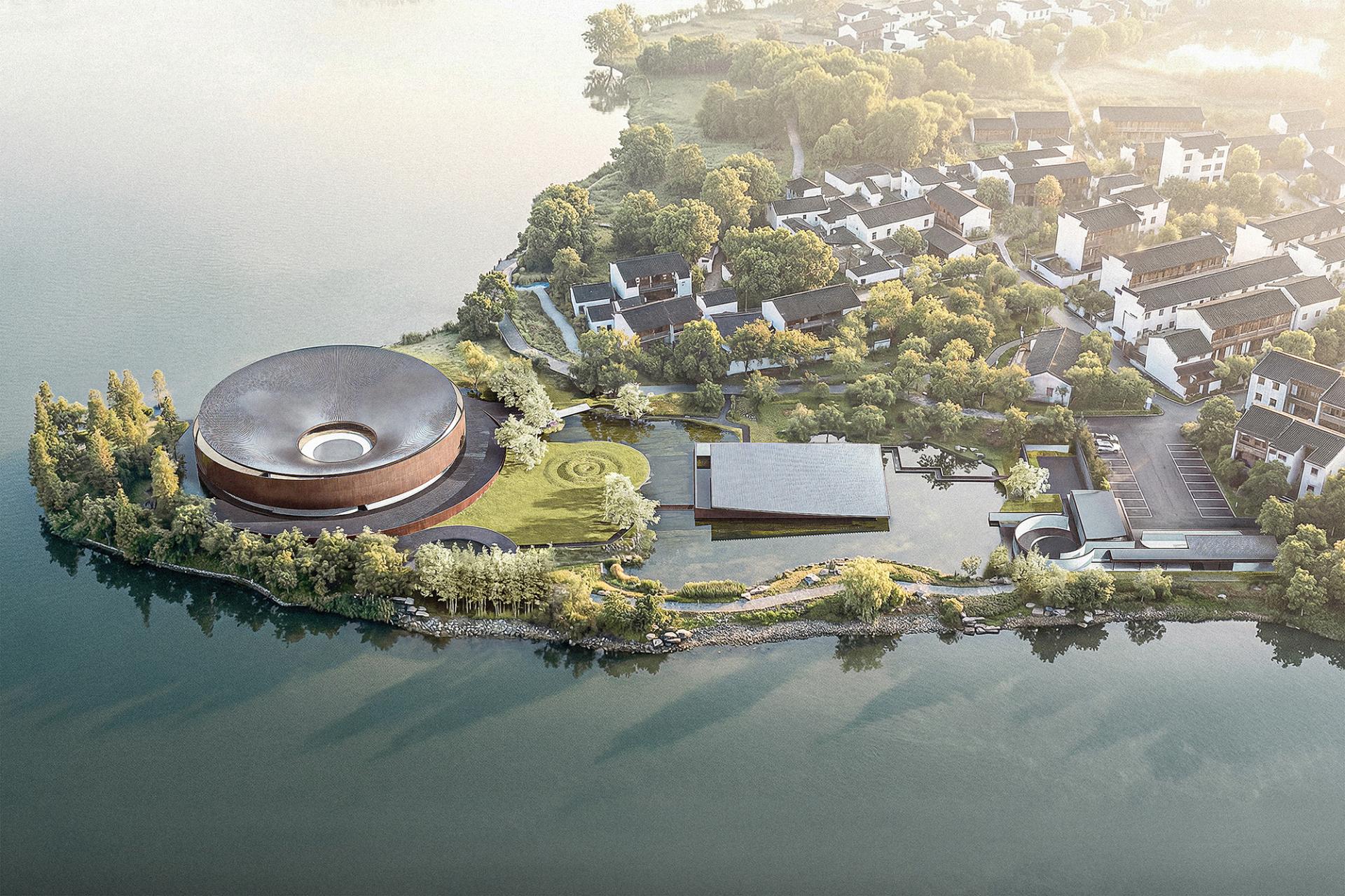
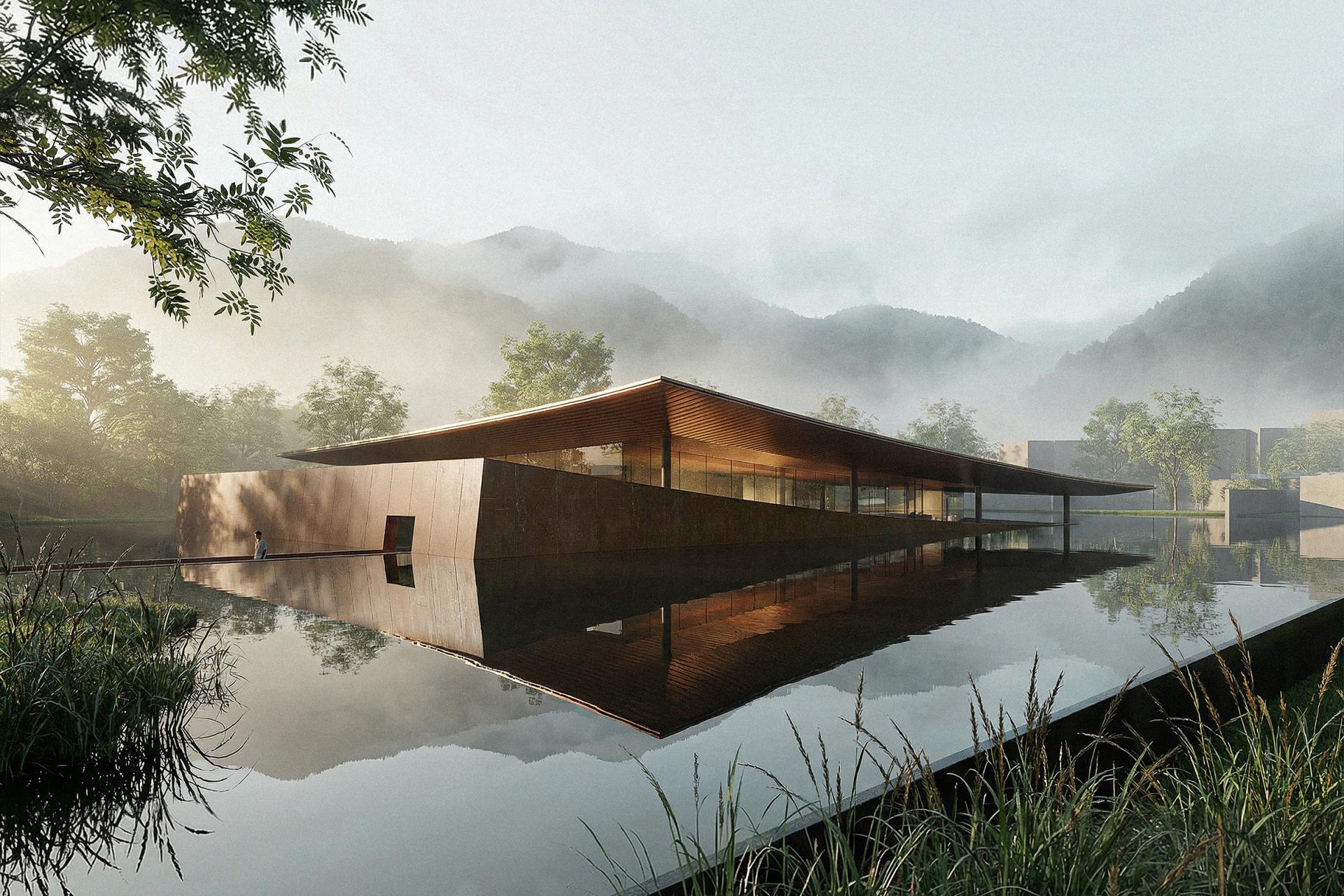
Situated on a peninsula at the confluence of three rivers, the project responds to a site defined by mist, water currents, and enclosing topography. Rather than imposing a dominant architectural gesture, the design adopts a strategy of minimal intervention, embedding new structures within the existing ecological system to achieve environmental continuity and spatial activation.
With a floor area ratio of 0.159 and green coverage exceeding 75%, the intervention prioritizes openness and landscape preservation. Elevated structures, permeable paving, and carefully controlled building massing reduce ground disturbance while maintaining hydrological and ecological flows. Public passages, courtyards, and corridors interweave to form an open spatial network, enabling continuous circulation across the site. Conceived as a “museum without walls,” the project integrates exhibition, community activity, and landscape into a flexible public infrastructure capable of supporting cultural events, educational programs, and seasonal activities.
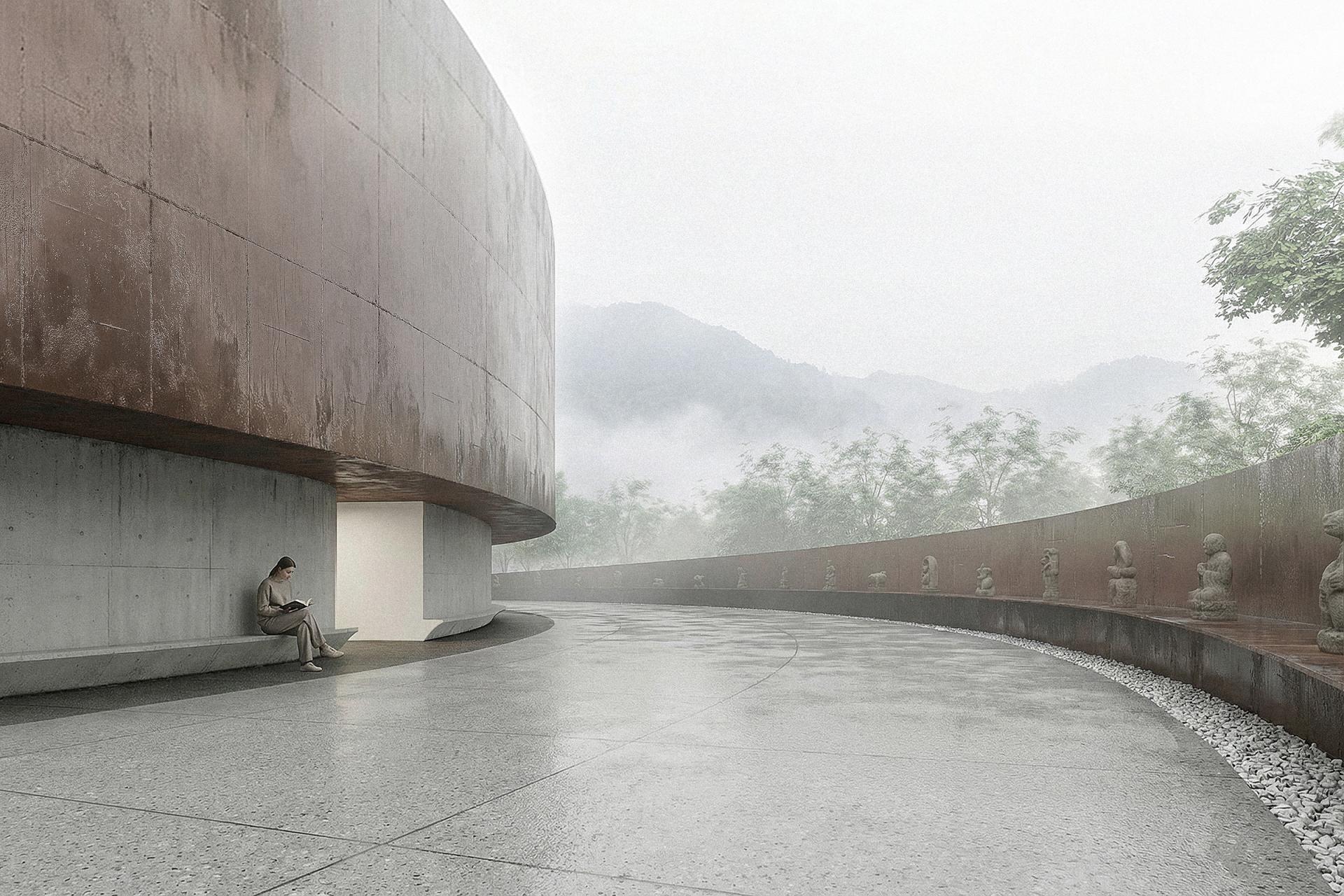
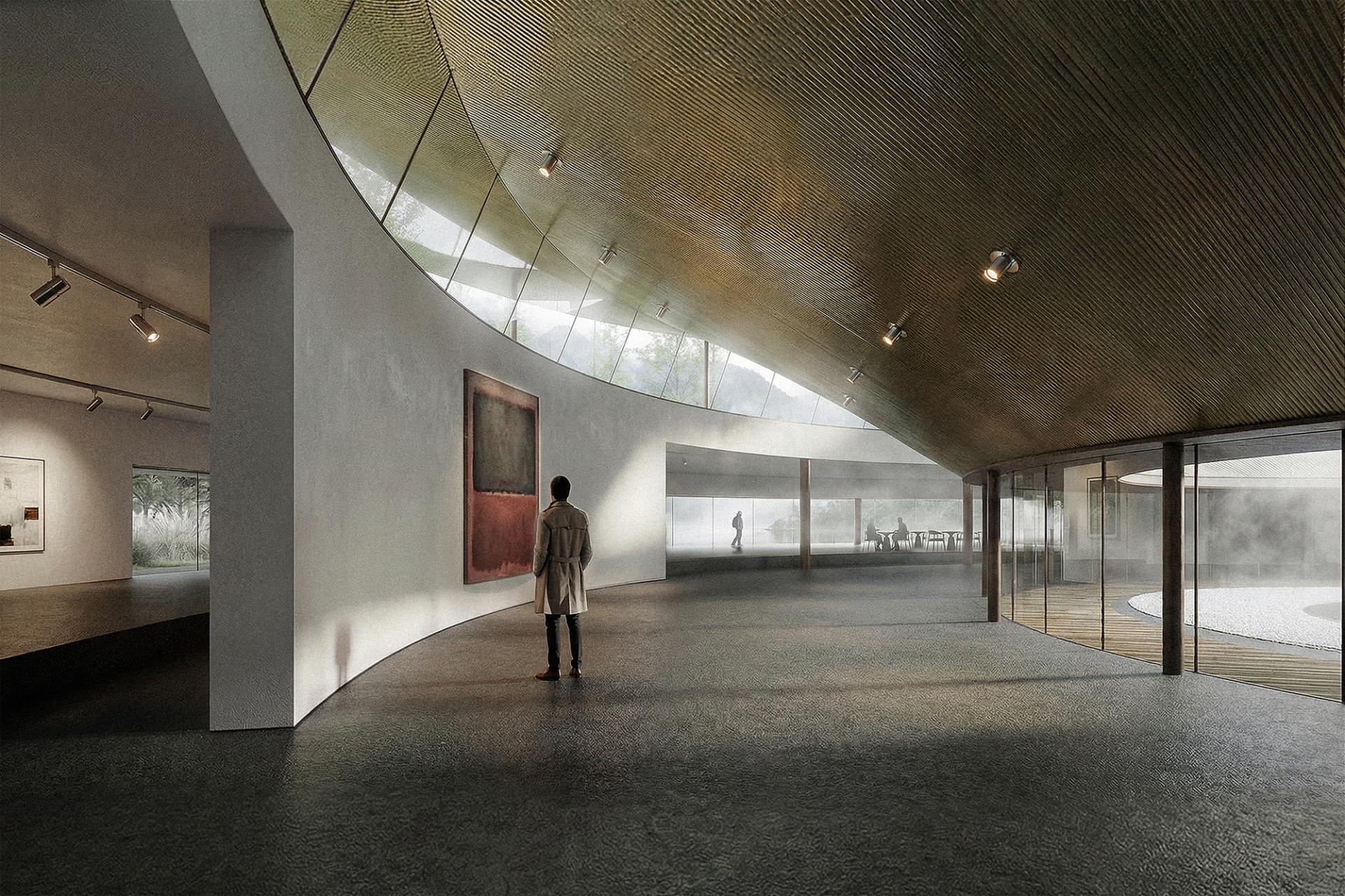
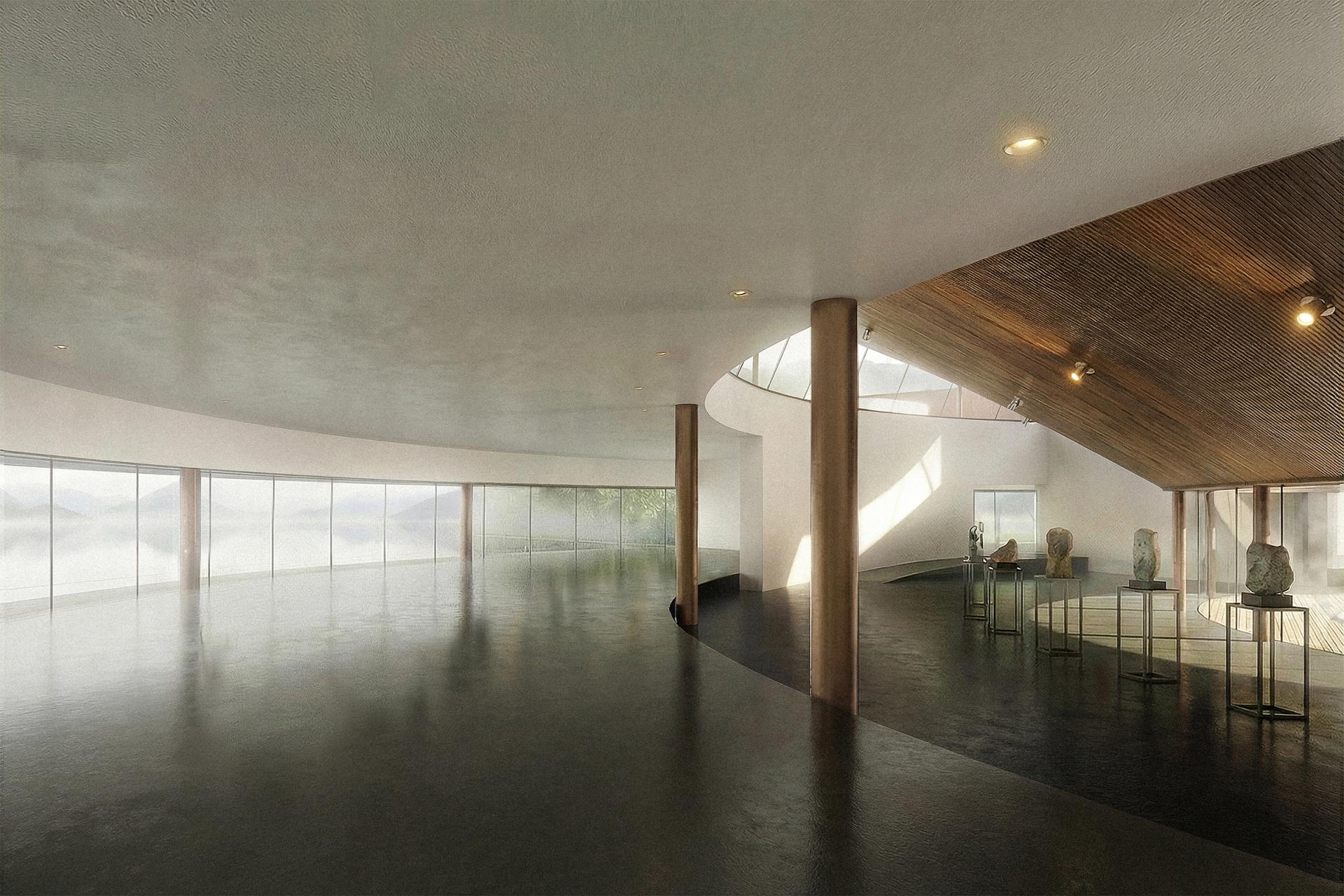
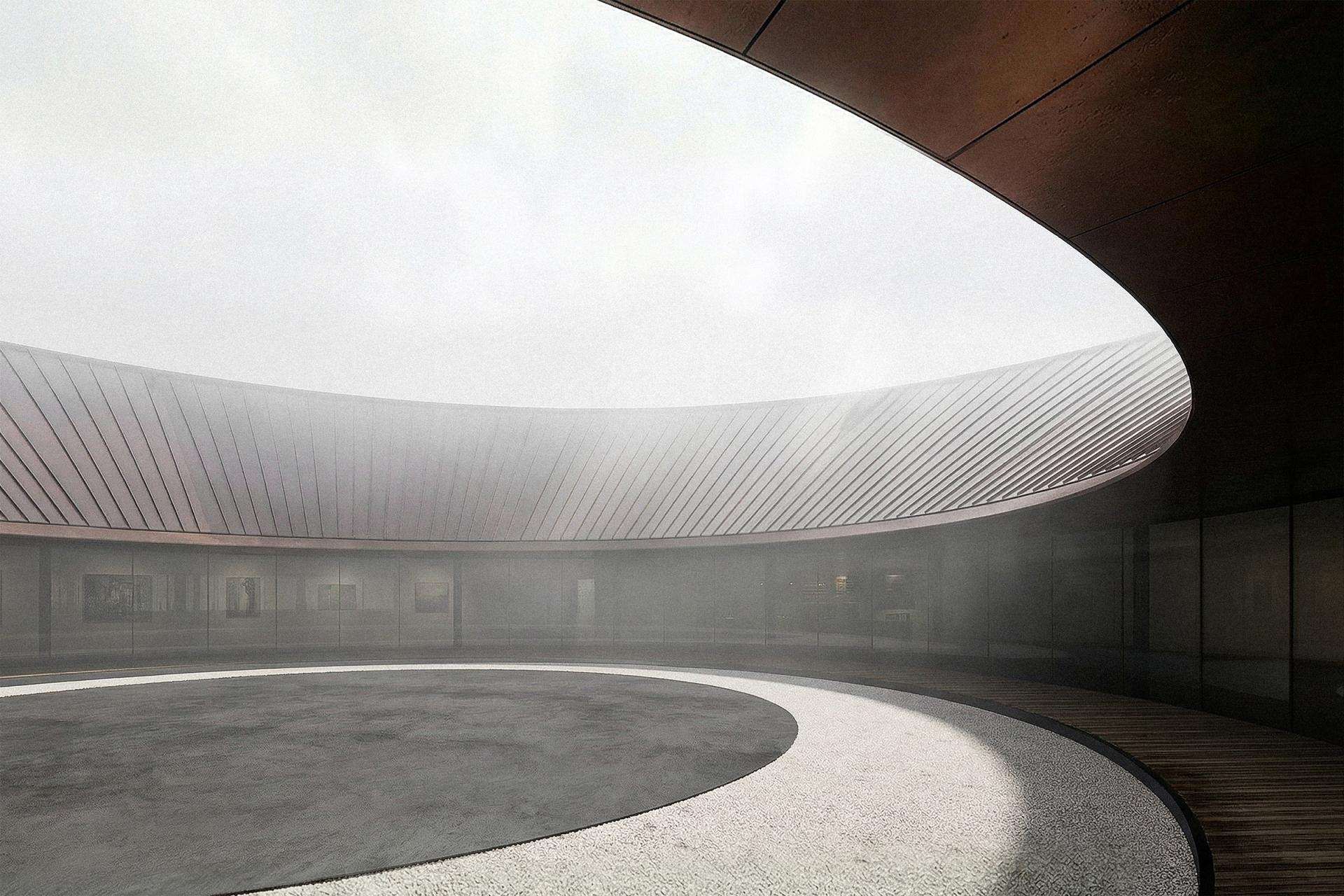
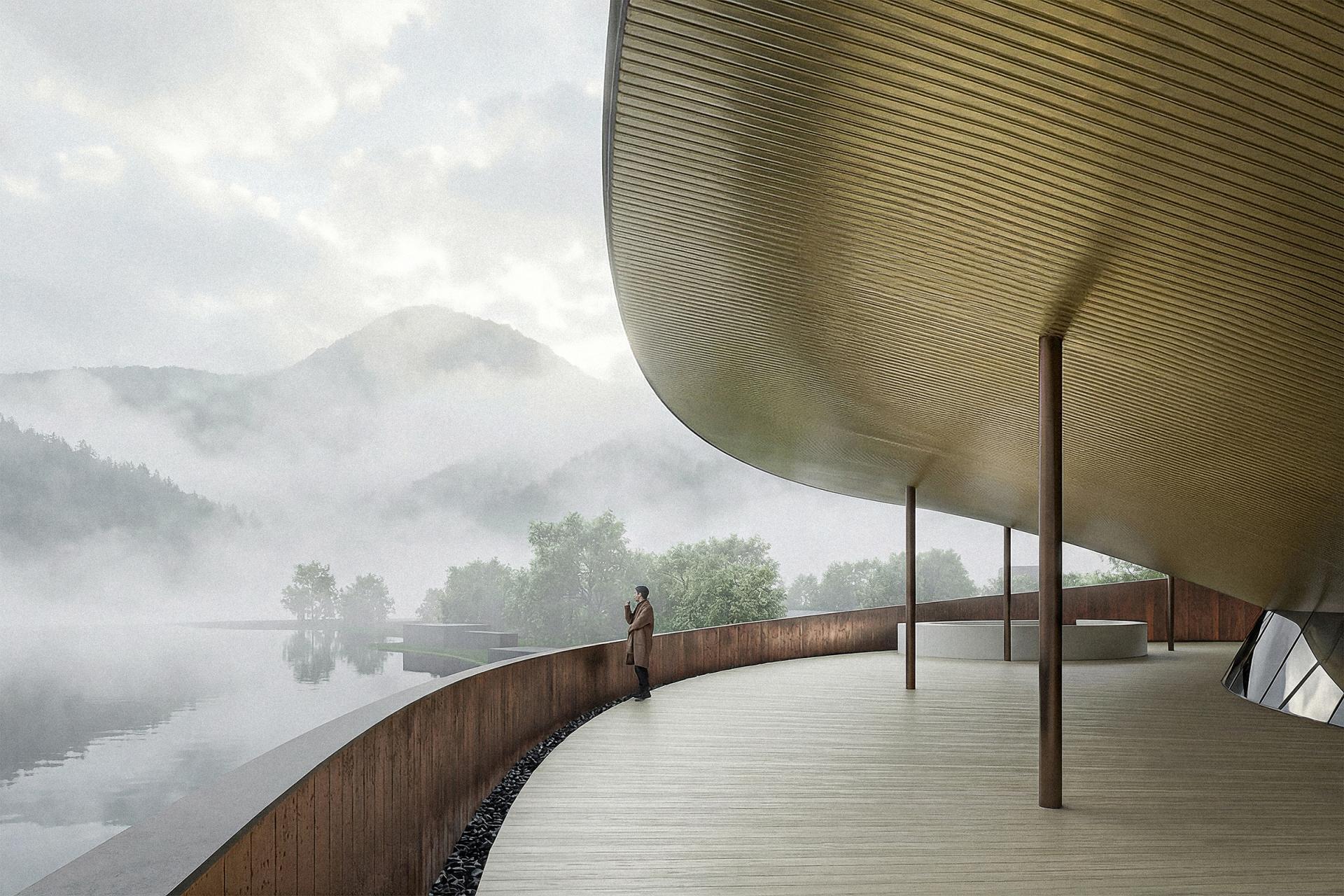
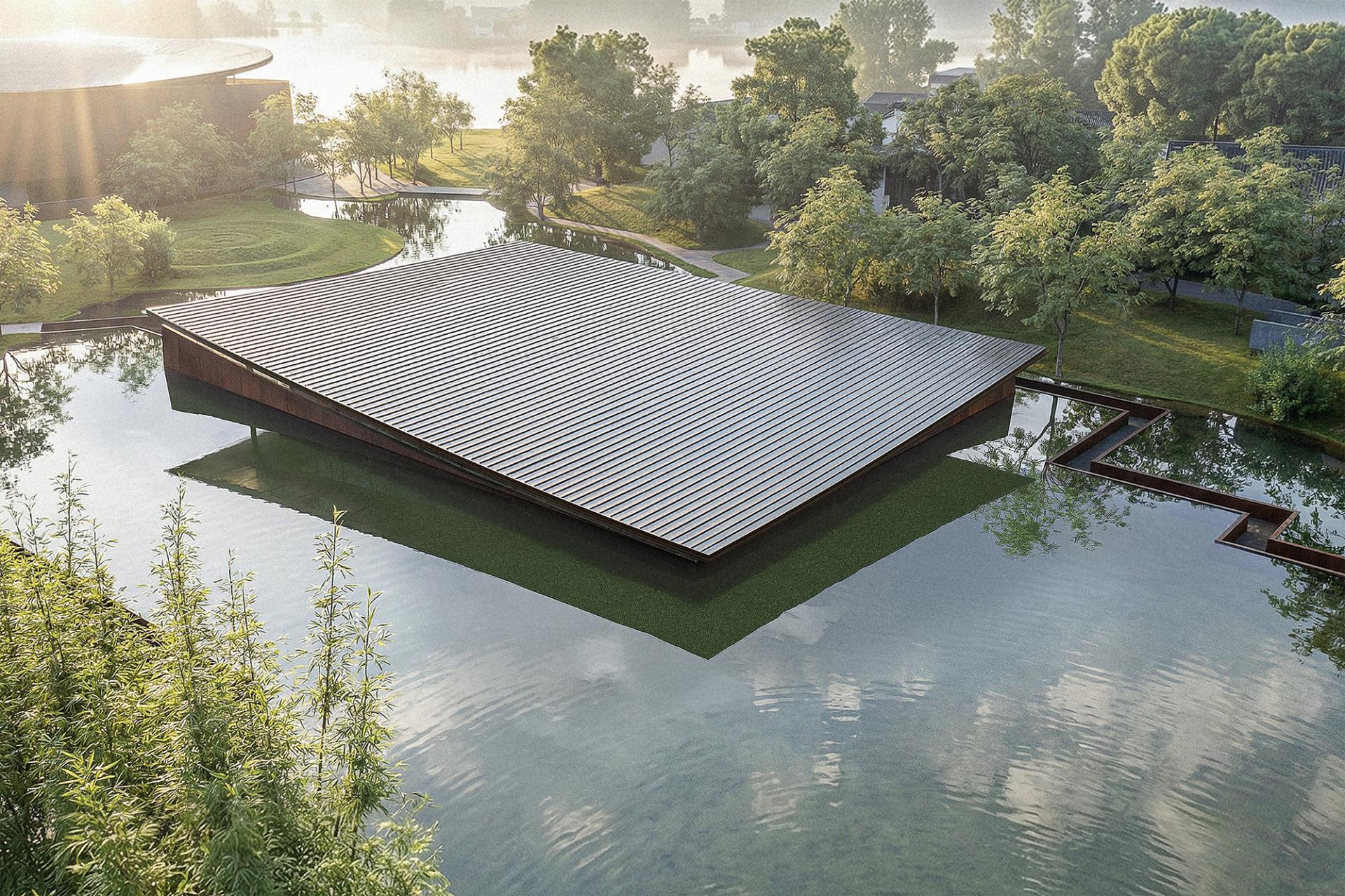
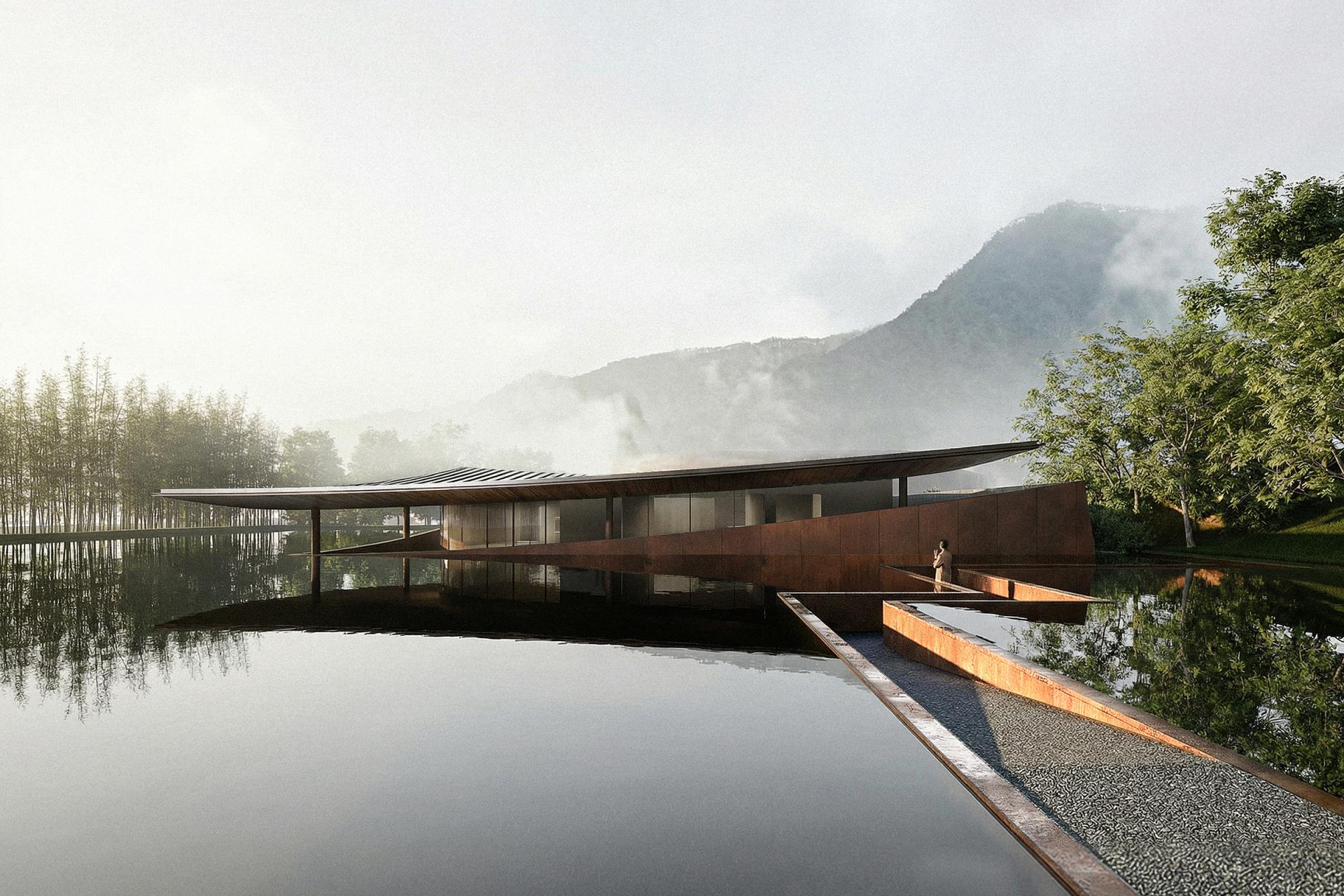
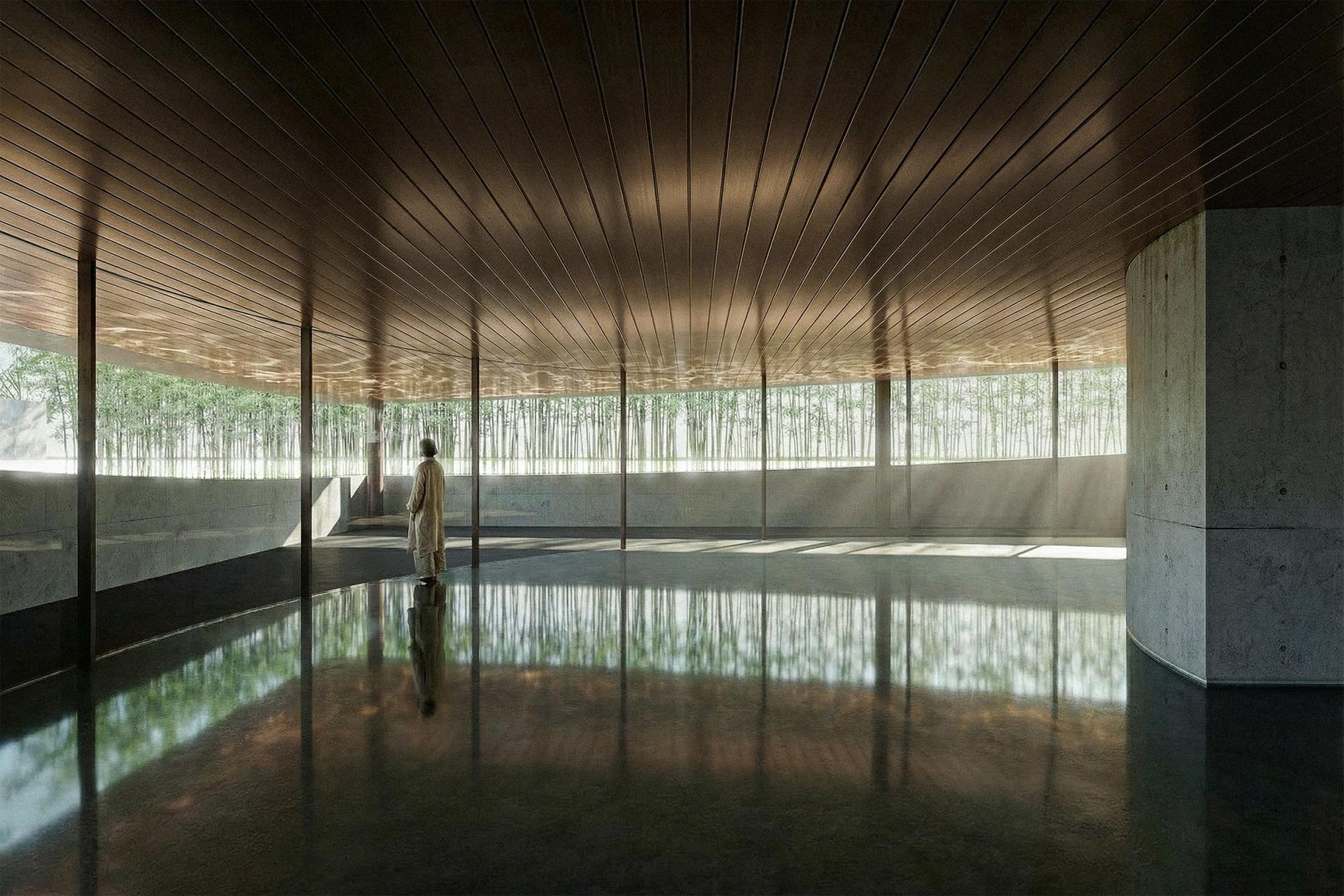
Two primary buildings structure the spatial experience. The waterfront pavilion adopts a circular plan, unfolding from landscape garden to courtyard, exhibition halls, and a riverside viewing gallery. A bowl-shaped double-curved roof, intentionally misaligned with interior walls, produces varied spatial scales and dynamic sightlines. The second pavilion, organized on a square plan and partially enclosed by water, is accessed via a descending ramp that gradually lowers visitors below the water datum, creating a contemplative atmosphere. Together, circle and square establish a typological dialogue between outward openness and inward introspection.
Weathering steel façades allow the architecture to evolve chromatically over time, reinforcing its environmental integration. Parametrically developed double-curved metal roofs ensure structural precision while enhancing daylight modulation and microclimate performance.
Rejecting superficial historic imagery, the project transforms local ecological conditions into a contemporary spatial language. As a low-density, open, and ecologically embedded intervention, it offers a replicable model for rural revitalization that balances environmental preservation, public value, and long-term operational sustainability.
Credits
Entrant
DAS DESIGN
Category
Interior Design - Residential
Entrant
Nanjing Tastife Culture Development Co., Ltd.
Category
Interior Design - Pavilions & Exhibitions
Entrant
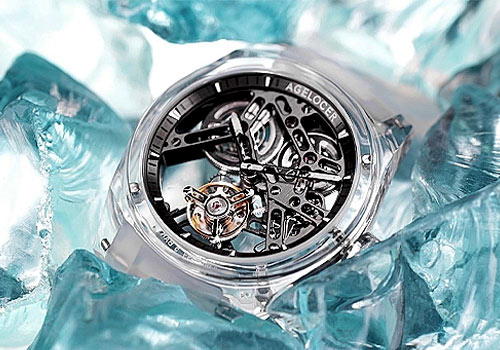
Guangzhou pinlun watch Co., Ltd
Category
Product Design - Watches
Entrant
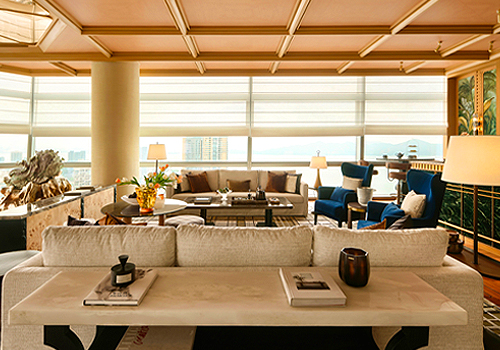
Shenzhen Puxiang Space Design Co., Ltd.
Category
Interior Design - Commercial