2026 | Professional

DANCING IN PURPLE GLORY
Entrant
Cheers Community
Category
Landscape Design - Cultural Heritage Design
Client's Name
WALKIN FOSHAN
Country / Region
China
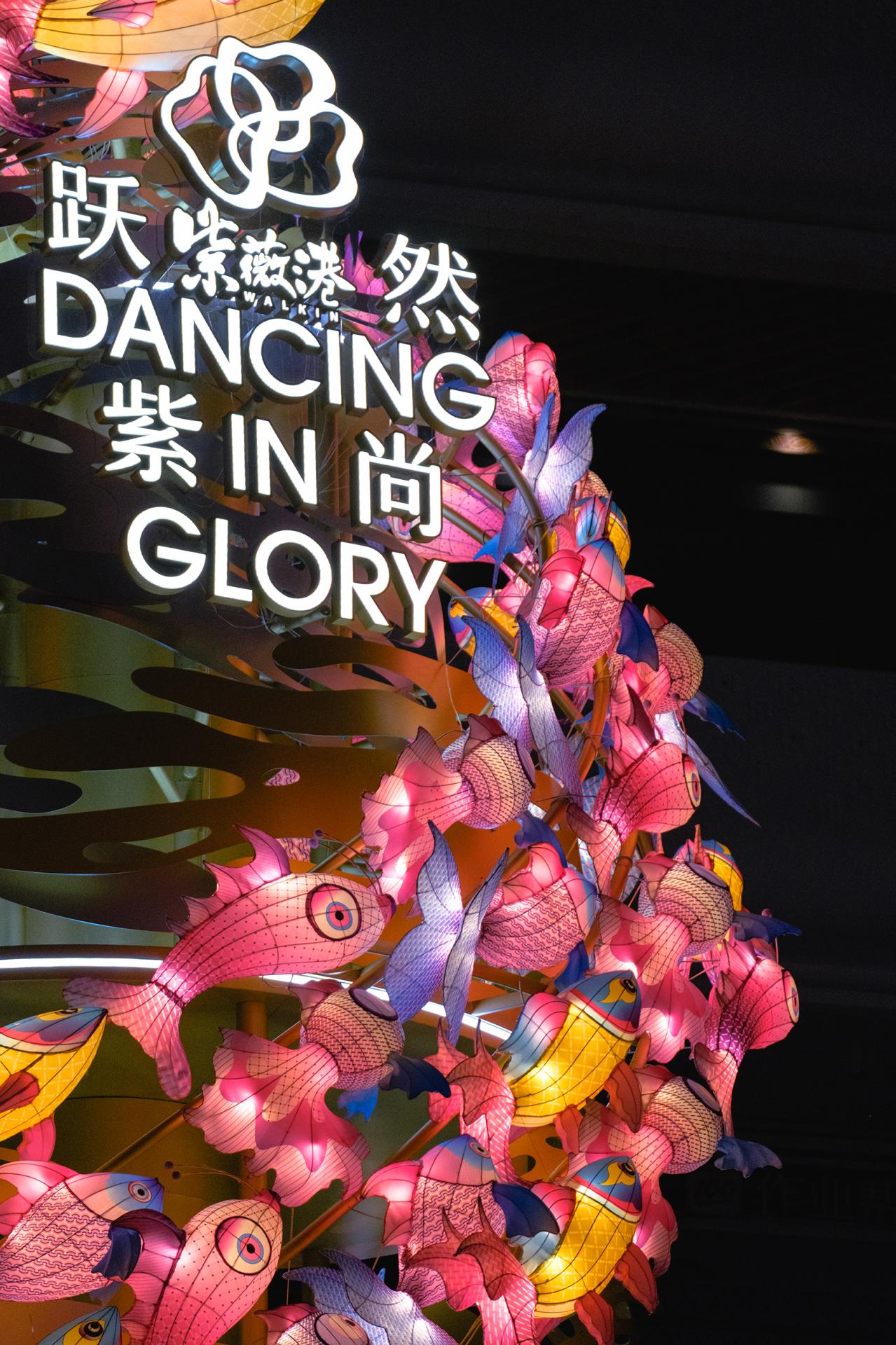
This project was created for the Christmas season, a globally recognized Western festival, and is located in Foshan, China—one of the country’s most important cities for intangible cultural heritage. Rather than reproducing conventional Western Christmas imagery, the design explores how traditional Chinese craftsmanship can be reinterpreted within a Western festive context, creating a culturally hybrid public space that is both accessible and distinctive.
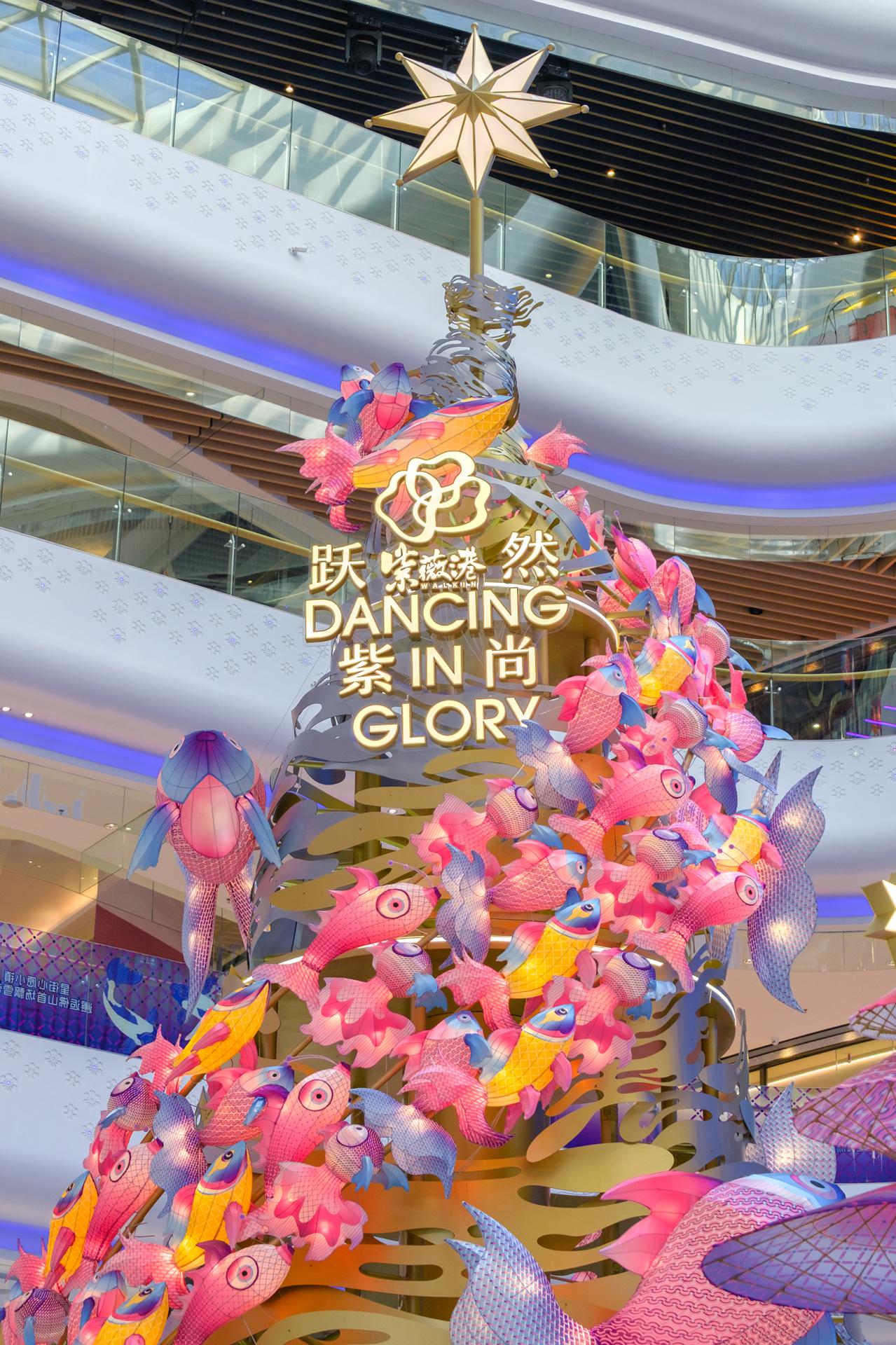
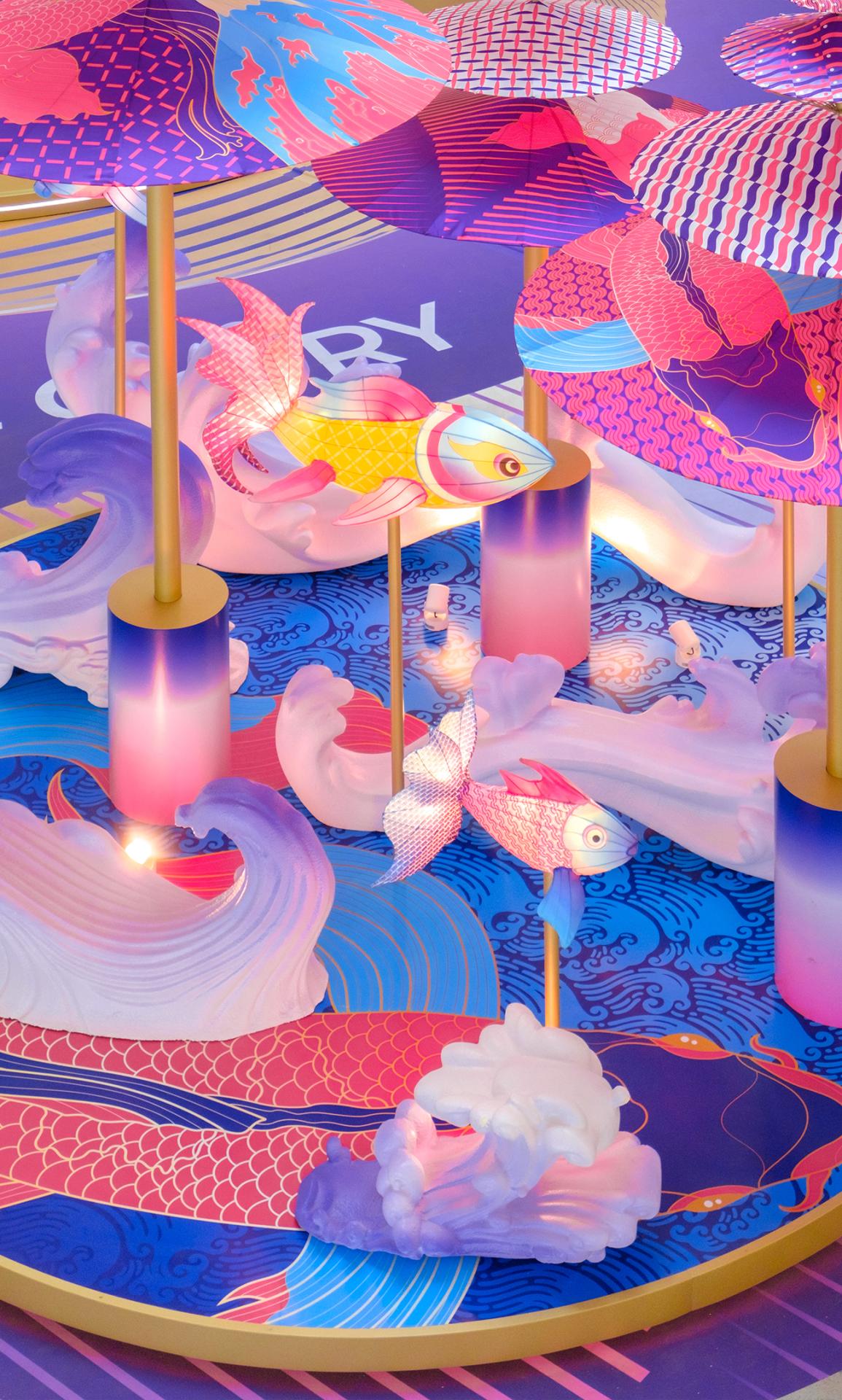
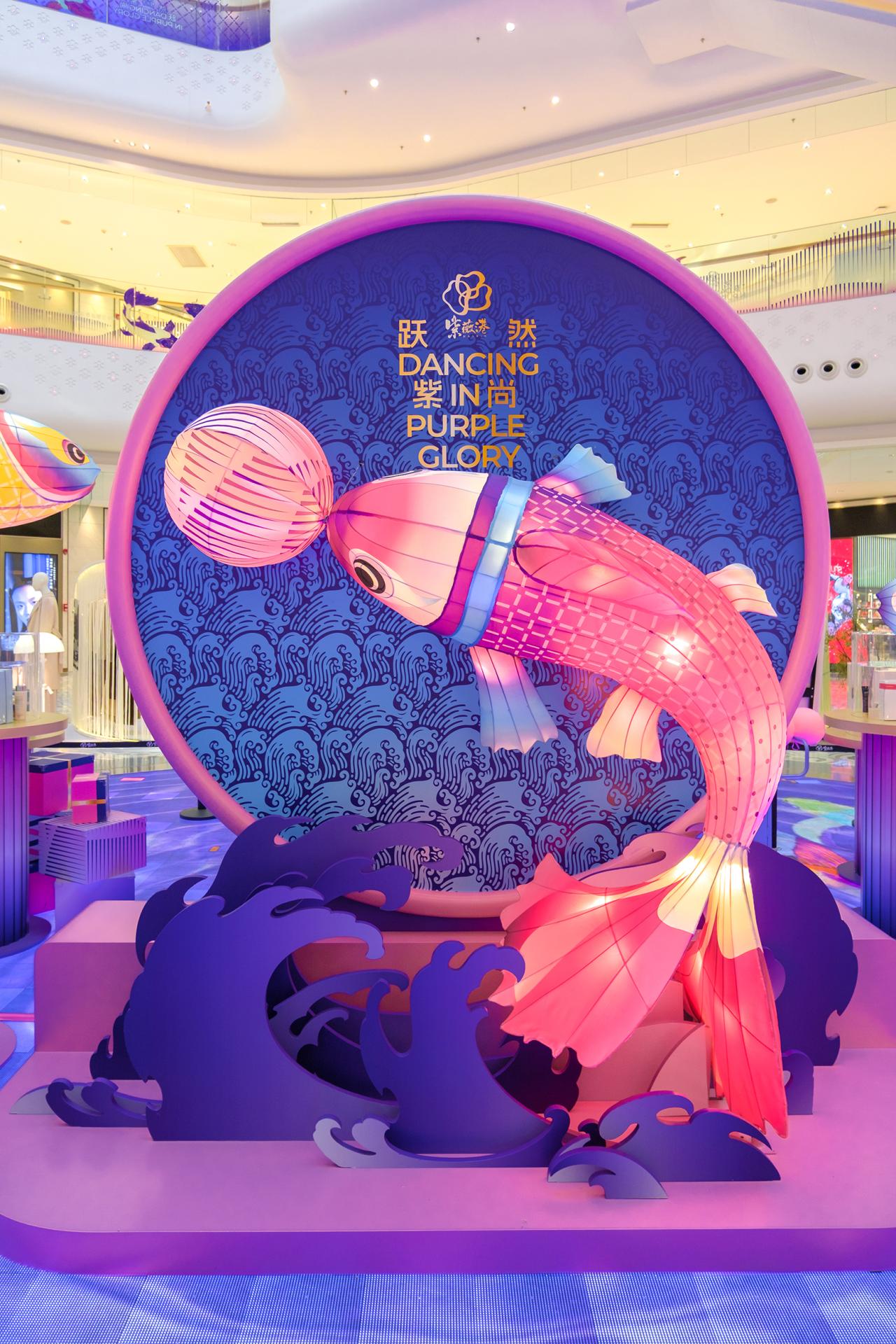
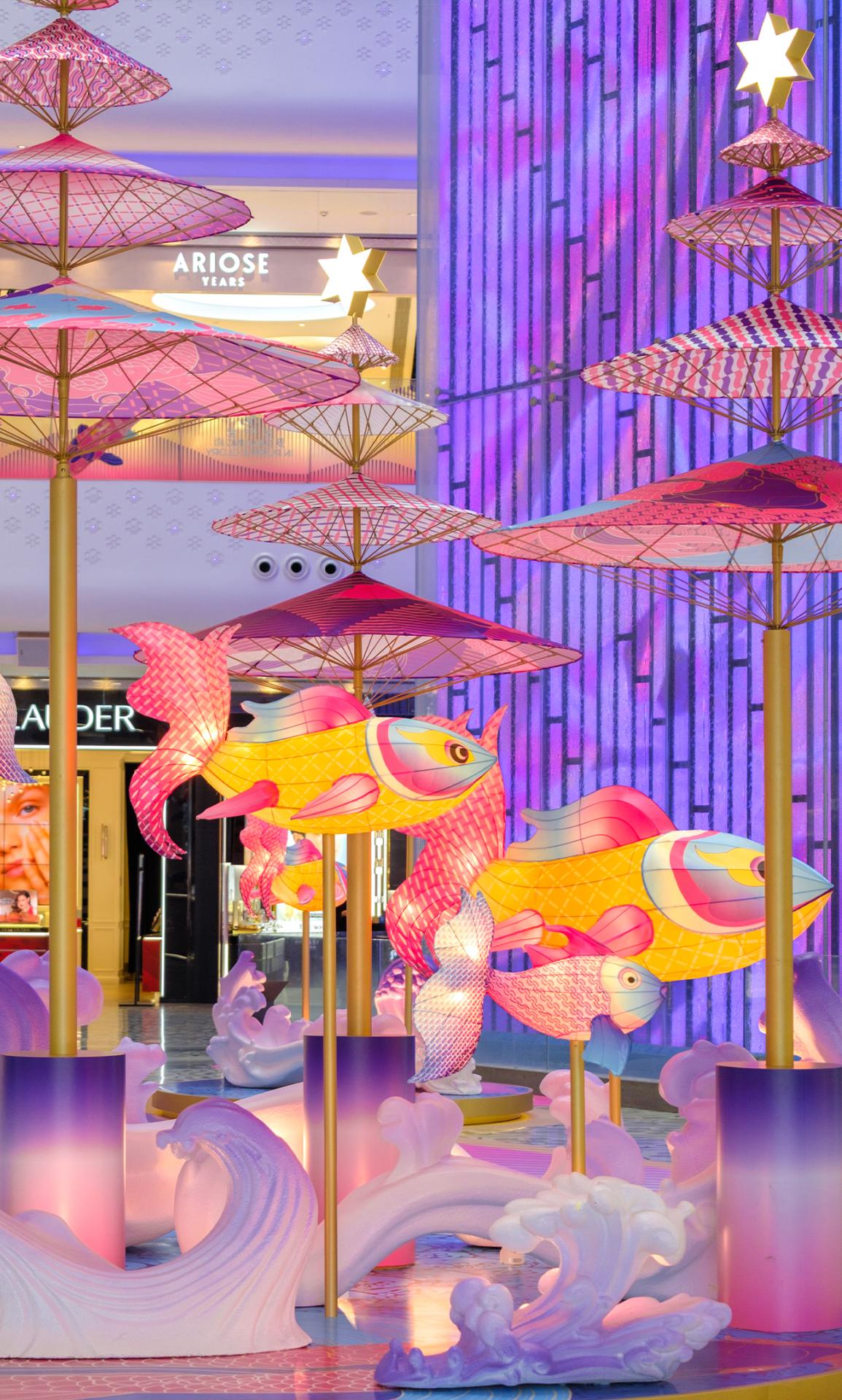
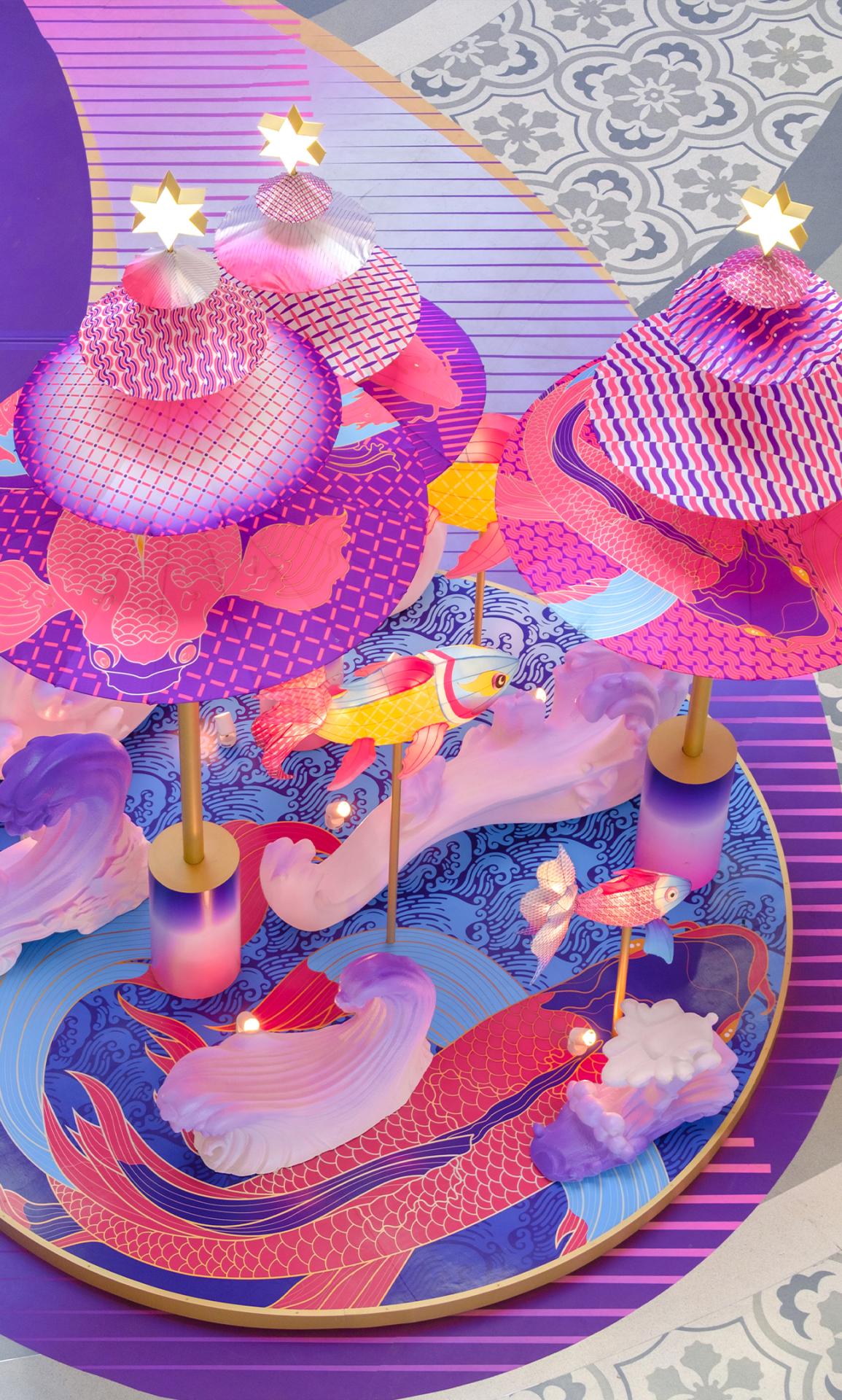
At the core of the project is the Daliang Fish Lantern, a Chinese intangible cultural heritage craft with a history of several hundred years, originating in Shunde, Foshan. The fish lantern is traditionally handcrafted using bamboo frames, silk or paper coverings, and hand-painted details, illuminated from within to create a soft, translucent glow. In Chinese culture, the fish symbolizes abundance, blessing, and continuity, and fish lanterns are commonly used in festivals as collective, processional light objects that emphasize shared celebration and ritual movement.
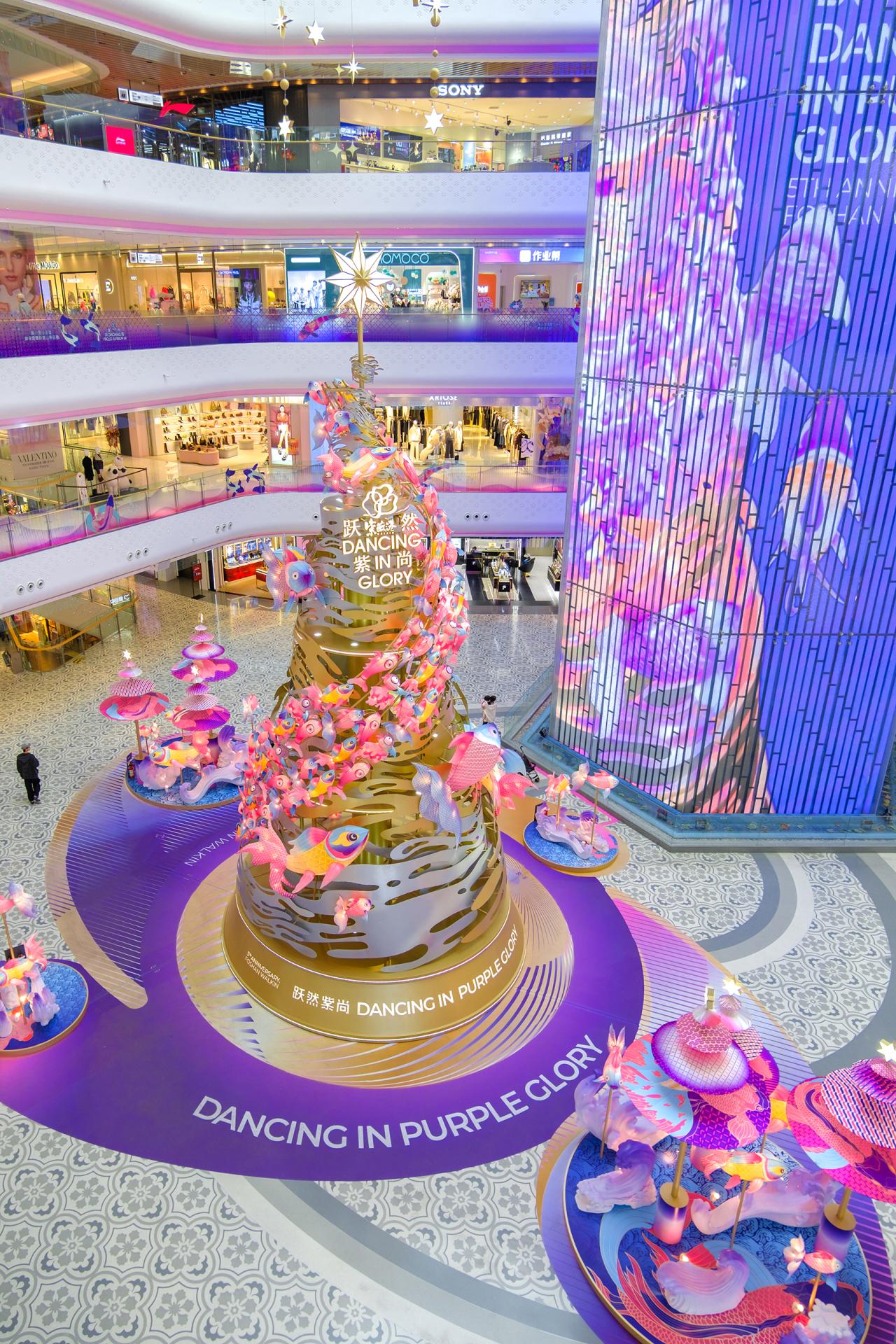
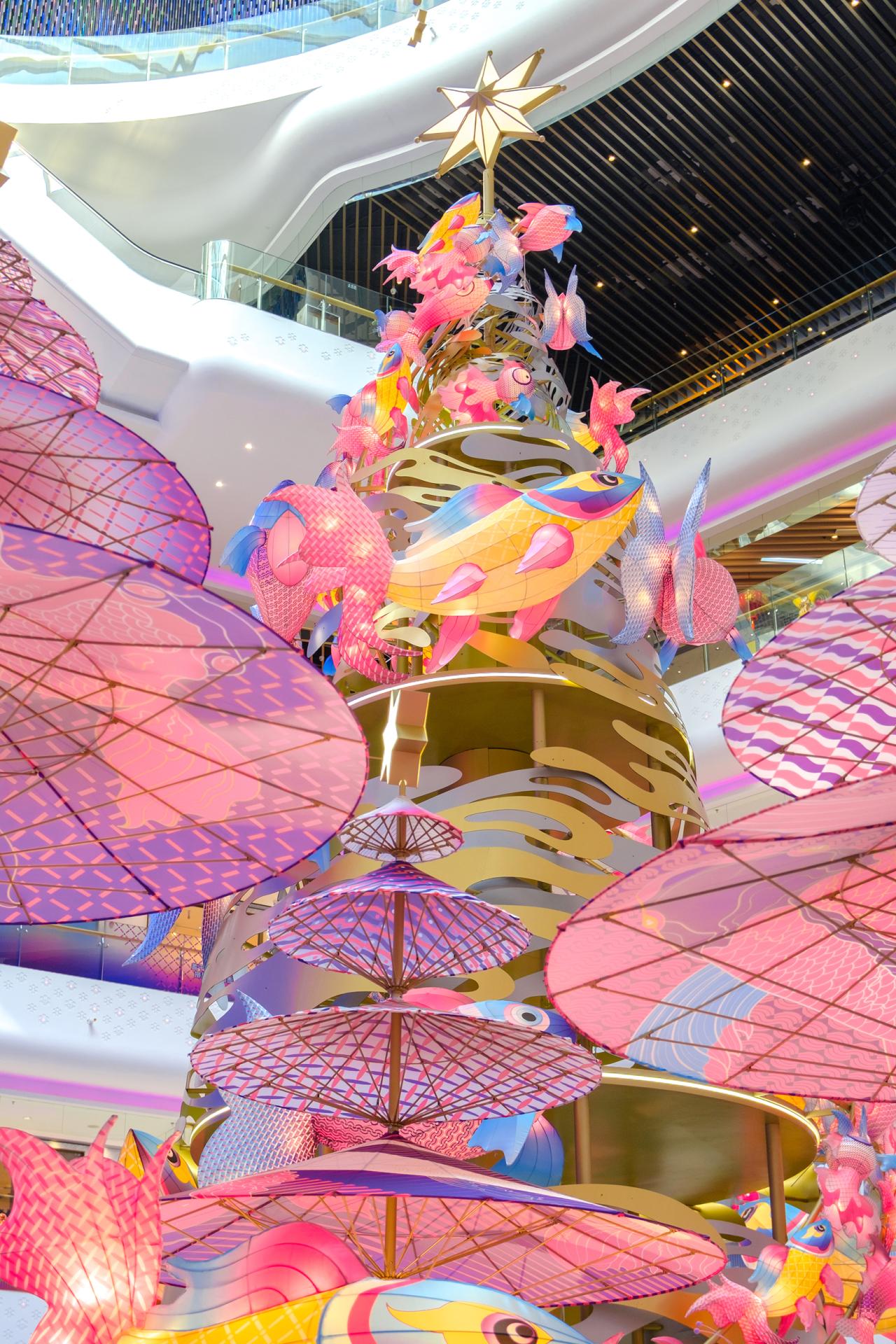
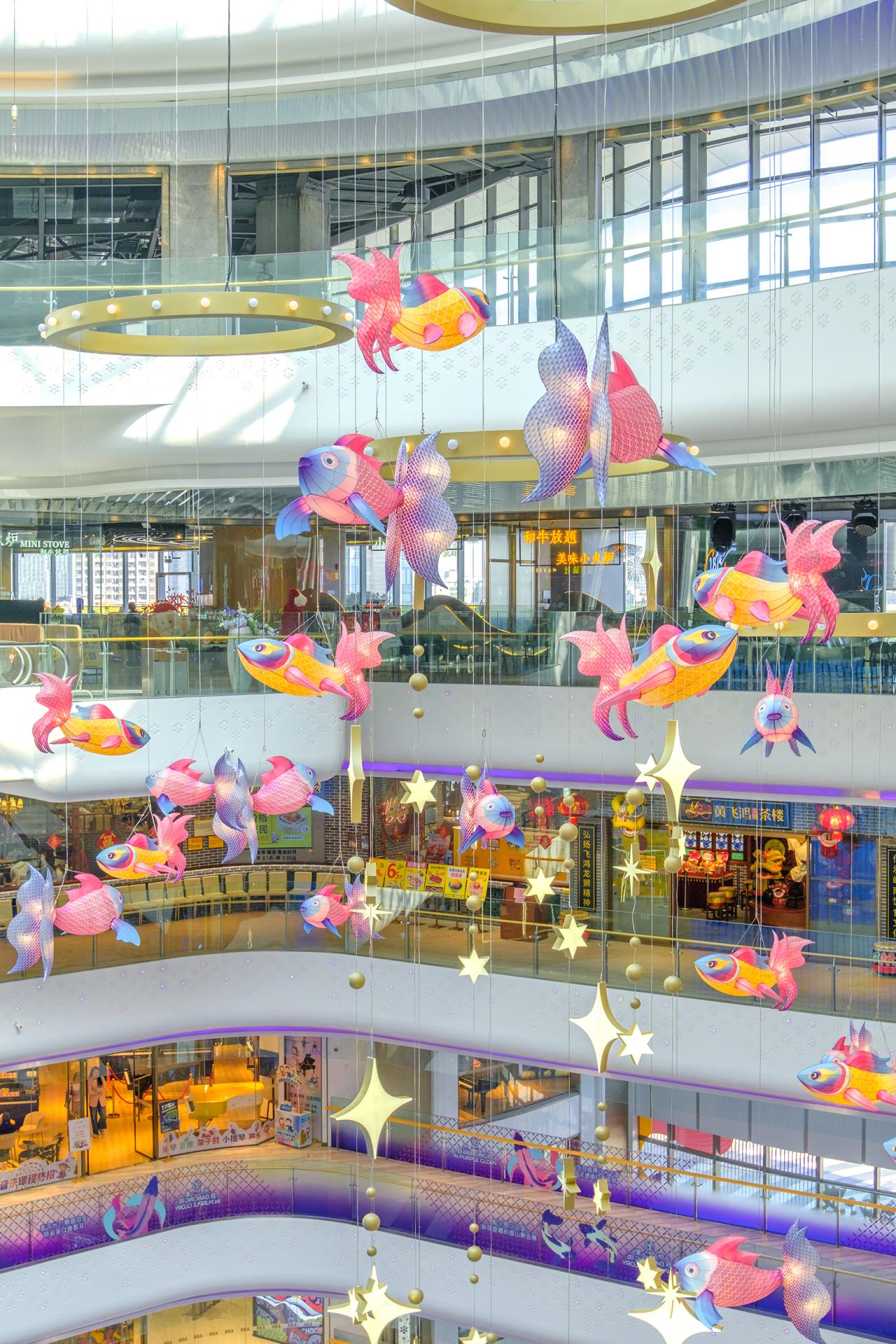
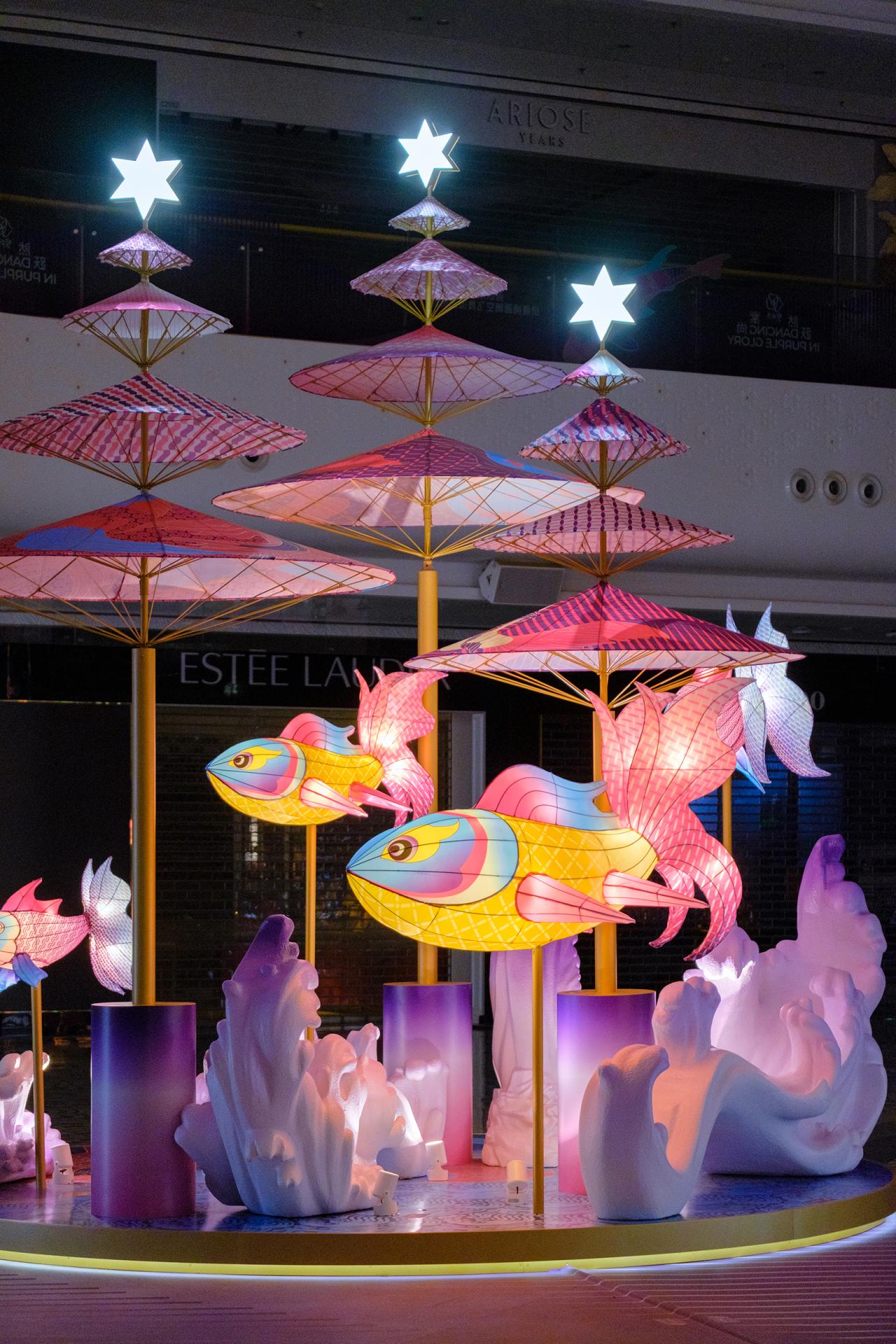
The design transforms this traditional craft into a large-scale contemporary installation by constructing a 30-meter-high vertical spatial structure within a commercial atrium. More than one thousand handcrafted fish lanterns, produced using traditional techniques, are suspended and assembled throughout the vertical space, forming a dynamic, immersive environment. The lanterns are arranged to suggest upward movement and fluidity, allowing visitors to experience the work through walking, viewing, and looking upward, rather than passive observation.
To further integrate Western and Chinese cultural elements, the project reinterprets familiar Christmas symbols through traditional Chinese materials and logic. A central “Christmas tree” structure is formed using Chinese oil-paper umbrellas, an object deeply rooted in Chinese daily life and craftsmanship. Through repetition, layering, and vertical composition, the umbrellas create a recognizable festive form while retaining their original cultural identity.
By embedding intangible cultural heritage into a contemporary festive setting, the project presents Chinese traditional craftsmanship as a living, adaptable cultural language. It demonstrates how heritage practices can move beyond preservation and display, becoming active contributors to global cultural dialogue and shared public experience within modern urban spaces.
Credits
Entrant
DAS Design Co.,Ltd
Category
Interior Design - Residential
Entrant
Suzhou Jonr Technology Co., Ltd.
Category
Product Design - Home Appliances
Entrant
CLV.DESIGN
Category
Interior Design - New Category: Sales Office
Entrant
ZOOE DESIGN
Category
Interior Design - Commercial