Interview
Haitao Yang
1 Congratulations on winning the French Design Awards! Can you introduce yourself and share about what inspired you to pursue design as a career?
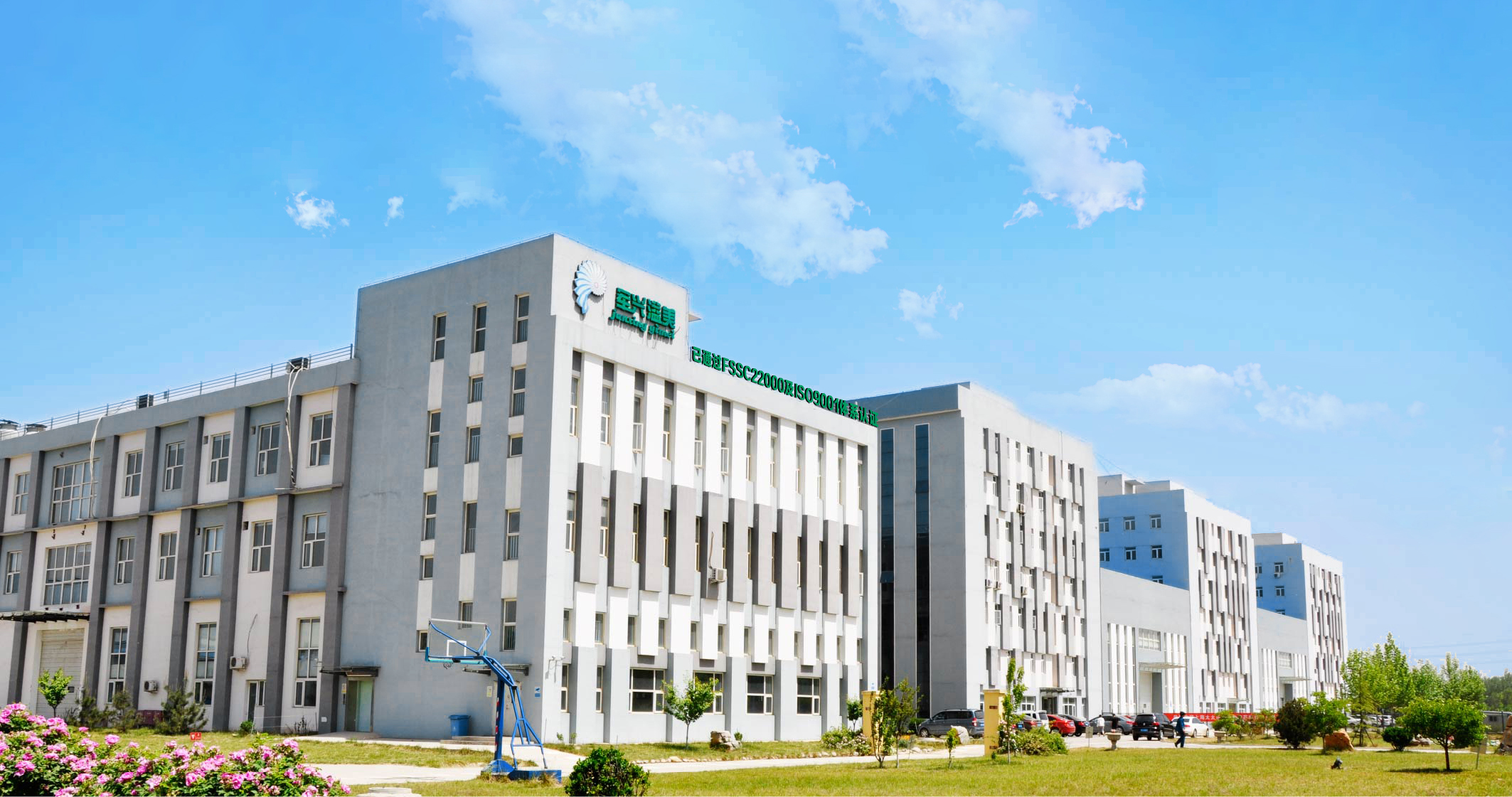
Hello, everyone. My name is Haitao Yang, General Manager of Langfang Junxing Yimei Packaging Products Co., Ltd., from Hebei Province, China. Founded in 1996, our company has accumulated 30 years of deep expertise in the R&D and manufacturing of paper can packaging and eco-friendly solutions. What inspired me to choose and dedicate myself to packaging design is 'the tangible touch of materials and structures in the physical world.' Packaging is far more than just an outer shell for a product—it serves as the very first physical connection between a brand and its consumers. Transforming humble paper-based materials into packaging forms that balance functional aesthetics with scalable industrial execution—through structural innovation, process optimisation, and sustainable technologies—this process of turning 'creative ideas' into 'real, tactile experiences' is what truly drives my passion.
2 What does being recognised in the French Design Awards mean to you?
Receiving the recognition of the French Design Awards marks the very first step for Junxing Yimei to step out of China and onto the global stage in our 30-year history. It is not only a resounding validation of our team's innovation in paper can structure and manufacturing processes, but also a compelling proof of Chinese manufacturing and design making their mark on the world.
3 How has this achievement impacted your career, team, or agency, and what opportunities has it brought so far?
This recognition has brought enormous confidence to our team, solidifying our position as a frontrunner in sustainable packaging R&D. It has highlighted the vast potential of paper cans and composite paper containers to an even broader network of industry clients and brand partners.
4 What role does experimentation play in your creative process? Can you share an example?
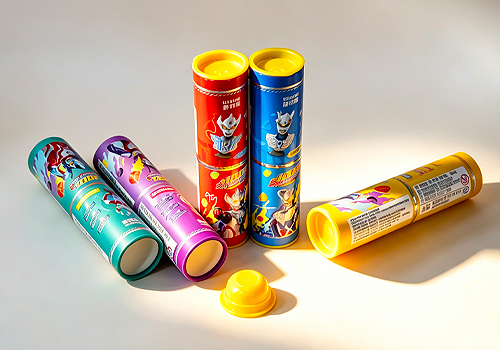
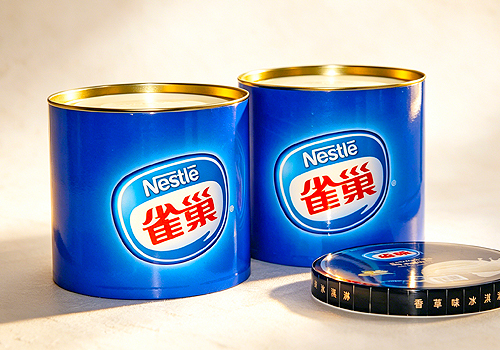
For me, experimentation and validation lie at the very heart of the design process. Without process testing, a design is nothing more than a concept on paper. Take the Nestlé ice cream paper tube development as an example: to achieve glue-free sealing and high-efficiency production, we ran hundreds of test iterations on paper weights, shrinkage rates, and heat-sealing parameters like temperature and pressure. Only through continuous trial and error on the factory floor were we able to strike the perfect balance between visual aesthetics and high-yield industrial production.
5 What's the most unusual source of inspiration you've ever drawn from for a project?
Reverse thinking is crucial.An unusual source of inspiration came from traditional Chinese mortise-and-tenon architecture, where craftsmen created rock-solid joints without glue, using only structural design. I incorporated this 'material interlocking' mechanism into the lid and bottom seal design of our paper cans, effectively minimising the use of chemical adhesives.
6 What’s one thing you wish more people understood about the design process?
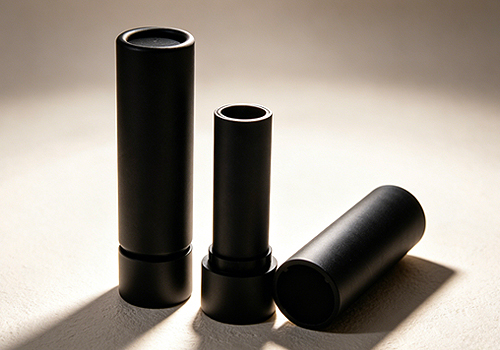
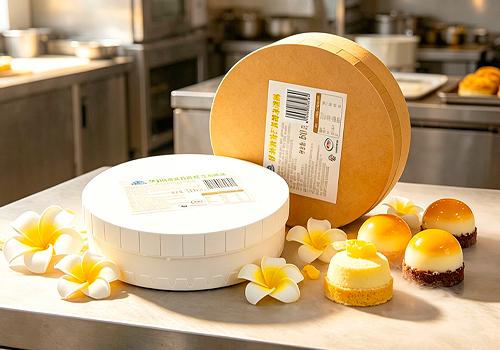
Great packaging design goes far beyond glossy renderings—its true essence is 'Design for Manufacturability.' Behind a deceptively simple paper can lies rigorous control over millimetre-level tolerances, precise material shrinkage calculations, and maximum line-wide automation efficiency. These unseen structural and process innovations are the foundational bedrock that turns visual beauty into physical reality.
7 How do you navigate the balance between meeting client expectations and staying true to your ideas?
Clients present market needs and business goals, and my role is to deliver the best technical and visual roadmap to realise them. When perspectives diverge, I rely on data, tangible prototypes, and empirical test results to do the talking—turning abstract concepts into visible, touchable commercial value.
8 What were the challenges you faced while working on your award-winning design, and how did you overcome them?
In our design journey, we reached a point of 'creative exhaustion.' To break the deadlock, we turned to AI and drew inspiration from successful cross-industry cases to expand our creative boundaries.
9 How do you recharge your creativity when you hit a creative block?
When facing a block, I leveraged AI to rapidly generate multi-dimensional concepts to break cognitive inertia, while drawing inspiration from successful cases in other industries. This synergy of AI exploration and cross-industry insights never fails to shatter the deadlock.
10 What personal values or experiences do you infuse into your designs?
I have always championed 'sustainability' and 'craftsmanship.' My long-standing expertise in packaging engineering and R&D has driven home the realisation that packaging designers carry a heavy environmental responsibility. I strive to 'deliver maximum packaging value using the minimum amount of resources.
11 What is an advice that you would you give to aspiring designers aiming for success?
Don't just be a 'draftsman'—be a 'creator who understands materials and manufacturing.' Step away from design software to learn the physical properties of materials, and visit factories to see how production lines operate. Only when you deeply understand limits and boundaries can your creativity gain the solid power to be realised, allowing your design to create true commercial and social value.
12 If you could collaborate with any designer, past or present, who would it be and why?
R. Buckminster Fuller—not just a designer, but a visionary structural engineer. His philosophy of 'doing more with less' deeply influenced my understanding of paper mechanics. In a collaboration, I'd love to apply his 'tensegrity' principles and geometric logic to paper container R&D, exploring how to build ultimate, load-bearing 'super paper structures' strictly through paper tension and interlocking—completely free of glue or plastic.
13 What's one question you wish people would ask you about your work, and what's your answer?
Question: "In an era where plastic packaging is exceptionally mature and low-cost, why do you still invest immense effort into developing complex and challenging all-paper packaging?" Answer: "Because the future of packaging belongs to green sustainability. Every trial we make and every technical hurdle we overcome today in paper structures and processes helps reduce plastic pollution for the next generation. Using the power of engineering and design to make the Earth lighter—that is the most romantic mission for packaging professionals."