Interview
Chen Yi-Pin
1 Congratulations on winning the French Design Awards! Can you introduce yourself and share about what inspired you to pursue design as a career?
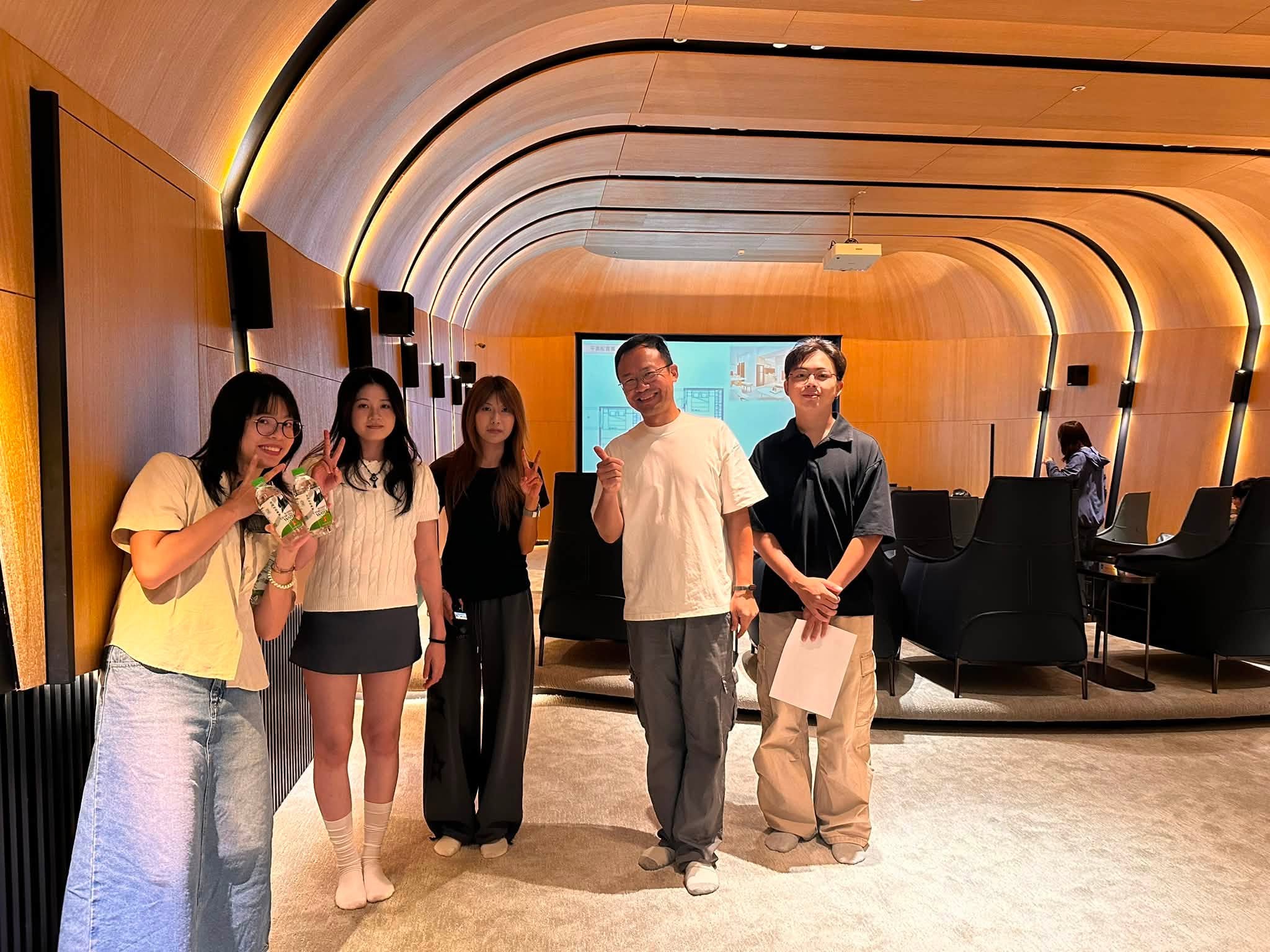
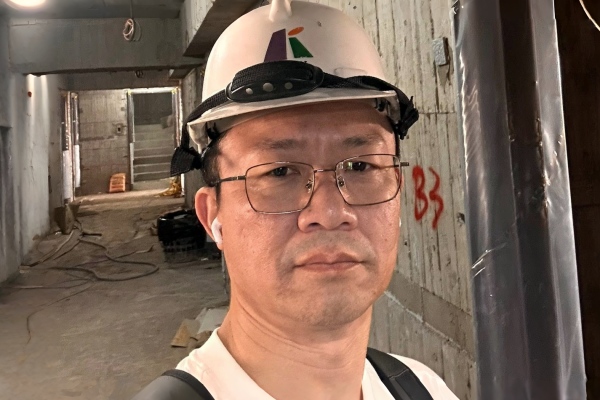
Thank you! I am Chen Yi-Pin, Design Director at JY Interior Design, based in Taiwan. Alongside my talented designer Liz Hsu and marketing specialist Shen Ya-Xin, our firm focuses on spatial transformation, residential design, and interior architecture. My passion for design stems from a deep fascination with how physical environments shape human emotion and daily rituals. I realised early on that space is not just a structural shelter, but a canvas for life—a medium through which light, materials, and human connections can be harmonised to elevate everyday living.
2 What does being recognised in the French Design Awards mean to you?
Being recognised by the French Design Awards is an immense honour and a vital milestone for our team. France has long been celebrated as the global epicentre of art, refinement, and aesthetic sophistication. To receive a Silver Award from such a prestigious international panel validates our core design philosophy: that subtractive aesthetics and thoughtful spatial reconfiguration can cross cultural boundaries to resonate globally.
3 How has this achievement impacted your career, team, or agency, and what opportunities has it brought so far?
This award has brought incredible momentum to JY Interior Design. It has bolstered our internal confidence and energised our team to push boundaries further. Externally, it has enhanced our brand prestige, attracting clients who value refined, high-concept spatial planning and holistic living solutions. It has opened doors for international visibility and higher-profile renovation projects.
4 What role does experimentation play in your creative process? Can you share an example?
Experimentation is at the very heart of our studio’s DNA. In our award-winning project, Serene Rebirth, we experimented extensively with hidden linear lighting concealed along raw, naturally textured stone slabs. We conducted multiple mock-ups to test how warm linear light interacted with handcrafted plaster and timber at different times of day, ensuring that shadow and illumination played a rhythmic dance without creating direct visual glare.
5 What's the most unusual source of inspiration you've ever drawn from for a project?
Inspiration often comes from unexpected places, such as the quiet rhythm of traditional tea ceremonies or the subtle gradients in aged rice paper. For Serene Rebirth, we drew inspiration from the concept of a "breath of fresh air"—how a tight, suffocating structure can be unburdened and allowed to exhale. This led us to soften harsh architectural edges using delicate arched ceiling motifs that seamlessly channel airflow, light, and movement.
6 What’s one thing you wish more people understood about the design process?
I wish more people understood that true spatial beauty relies heavily on what is invisible—the hidden mastery of functionality, proportion, and subtractive planning. Beautiful finishes are easily seen, but the true magic lies in eliminating dark, narrow corridors, integrating concealed cabinetry, and engineering subtle details like floating bases for smart appliances. Good design should feel effortless to live in, even though immense effort went into simplifying it.
7 How do you navigate the balance between meeting client expectations and staying true to your ideas?
We view client expectations not as limitations, but as the foundational brief for our creative storytelling. Our approach is deeply empathetic: we listen closely to their daily habits, living pain points, and aspirational routines. We then translate those needs through our aesthetic lens. By demonstrating how our design solutions—like an integrated LDK layout—actually enhance their quality of life, we establish mutual trust that aligns client desires with our artistic integrity.
8 What were the challenges you faced while working on your award-winning design, and how did you overcome them?
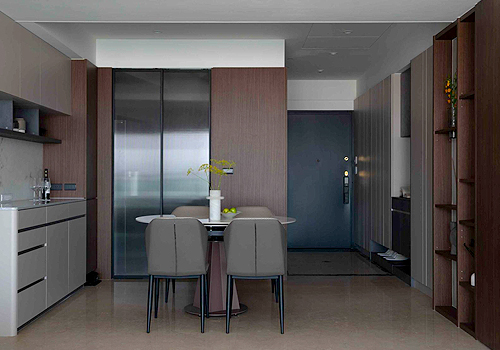
The main challenge of Serene Rebirth was transforming a 25-year-old residence constrained by heavy, fragmented, and dark layouts. The structural frame severely restricted natural light. We overcame this by adopting a strict "subtractive aesthetics" philosophy—removing non-structural wall partitions to establish an open-concept LDK (Living, Dining, Kitchen) zone. This opened up clear sightlines, allowed sunlight to permeate deep into the floor plan, and transformed a compartmentalised space into a unified, luminous sanctuary.
9 How do you recharge your creativity when you hit a creative block?
When facing a creative block, I step away from the drawing board and immerse myself in nature or art exhibitions. Observing how natural light filters through tree canopies or studying how sculptors balance volume and void helps reset my spatial intuition. Stepping back allows the subconscious mind to organise ideas naturally, returning to the project with renewed clarity.
10 What personal values or experiences do you infuse into your designs?
I deeply value mindfulness, calm, and practical warmth. Growing up in an environment where home was a tranquil shelter, I believe spaces should act as a sanctuary from the bustling outside world. I infuse these values by utilising low-saturation palettes—high-grade greys and soft off-whites—paired with tactile materials like warm timber. I design homes that actively cleanse "worldly dust" and restore emotional peace.
11 What is an advice that you would you give to aspiring designers aiming for success?
Focus on the fundamentals of proportion, light, and living habits before chasing transient surface trends. Cultivate deep empathy for the people who will inhabit your spaces, and never be afraid to remove unnecessary elements. True mastery in interior architecture is not about how much you can add to a space, but how thoughtfully you can refine and subtract until only the essence remains.
12 If you could collaborate with any designer, past or present, who would it be and why?
I would be deeply honoured to collaborate with Peter Zumthor. His profound mastery of material tactile quality, atmosphere, and poetic light has always been a great source of reverence for me. Learning his approach to creating architecture that engages all human senses would be an extraordinary experience.
13 What's one question you wish people would ask you about your work, and what's your answer?
Question: "How does this home feel at night compared to during the day?" Answer: "While the home is washed in bright, airy natural light during the day, at night it transitions into an intimate, warm sanctuary. Through layered, indirect linear lighting and architectural soffits, the space transforms softly into a calming environment where shadows become part of the decor, gently wrapping the residents in a peaceful embrace."